SSVF rental assistance runs on a three-month clock
How SSVF grantees administer temporary financial assistance: eligibility, the habitability check, rent reasonableness, payments to landlords and utilities, recertification every three months, and the HMIS record VA reads each month.
Supportive Services for Veteran Families is a VA grant program under 38 CFR part 62, and much of what it pays for is housing. In FY2024, 42% of grantees' award funds went to temporary financial assistance: rent, deposits, utilities, emergency housing and the other categories the rule allows, every dollar of it paid to a landlord, utility or vendor rather than to the veteran.
The rules run on rolling windows. Standard rental assistance is capped at six months in any twelve and ten in any twenty-four, or nine and twelve for extremely low-income households. Every participant is recertified at least every three months. A unit is checked against a habitability standard before assistance starts, the rent has to be reasonable against comparable units, and each check becomes its own entry in the CoC's HMIS, which uploads to VA every month.
Many grantees also run CoC or ESG rental assistance, often for the same households, under different rules. The writing below covers where SSVF sits next to those programs and where its rules differ.
Housing search cost matrix
22 housing search and move-in costs checked against SSVF, CoC, ESG, HCV and Medicaid, with the citation behind every cell. Find which deposits, fees, arrears and landlord payments SSVF can cover for a household your CoC or ESG award cannot.
Open the matrix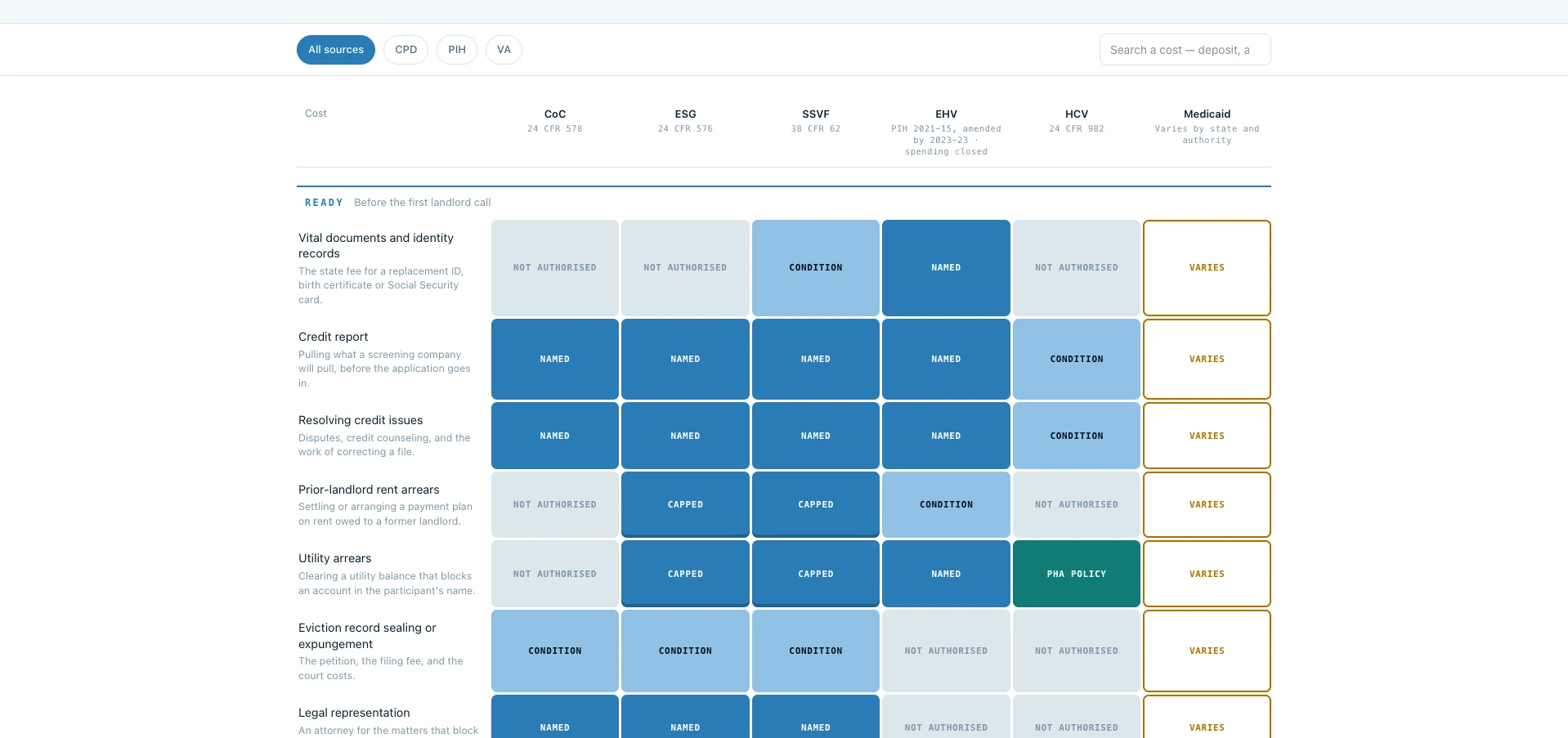
One SSVF household, from intake to the VA upload
Each step has a rule in part 62 and a document a VA monitor will ask for. Most of the time goes into keeping the payments, the clock and the HMIS record in agreement.
Start here
The pieces worth reading first.
Most of what your team has read or been told about HOTMA was written for public housing authorities administering the Housing Choice Voucher program and public housing. A good deal of it does not apply to a CoC or ESG-assisted household. Acting as though it does can cost a household its assistance.
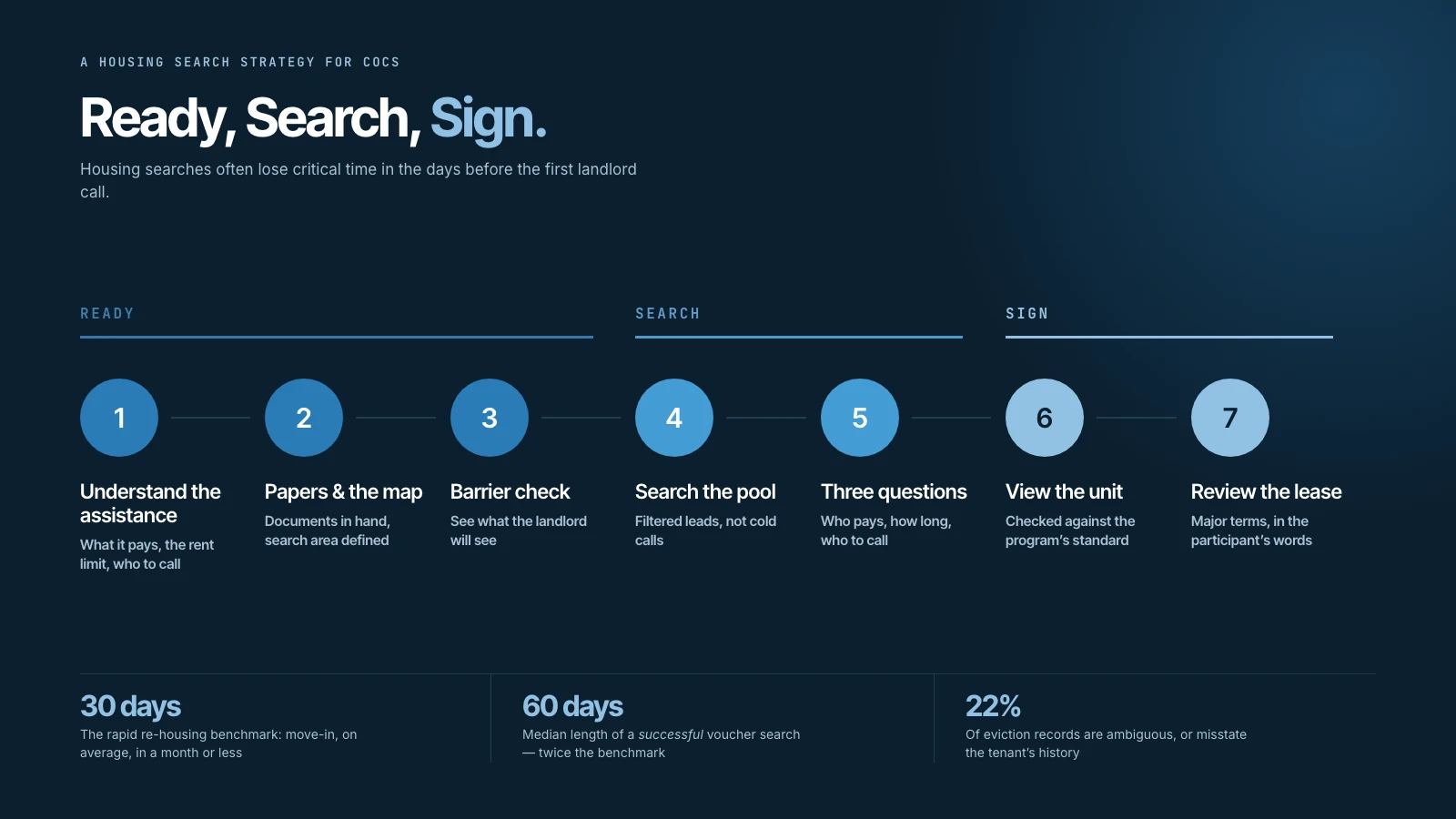
Housing searches often lose critical time in the days before the first landlord call. A structured housing search strategy for CoCs puts readiness ahead of listings, so participants begin the search with the information, documents, housing options, and support needed to act on an available unit.
Every SSVF payment is recorded twice: once in the agency's books, and once in HMIS as its own entry, removed again if the check comes back. At a few hundred households, keeping those two records in step is a job in itself.
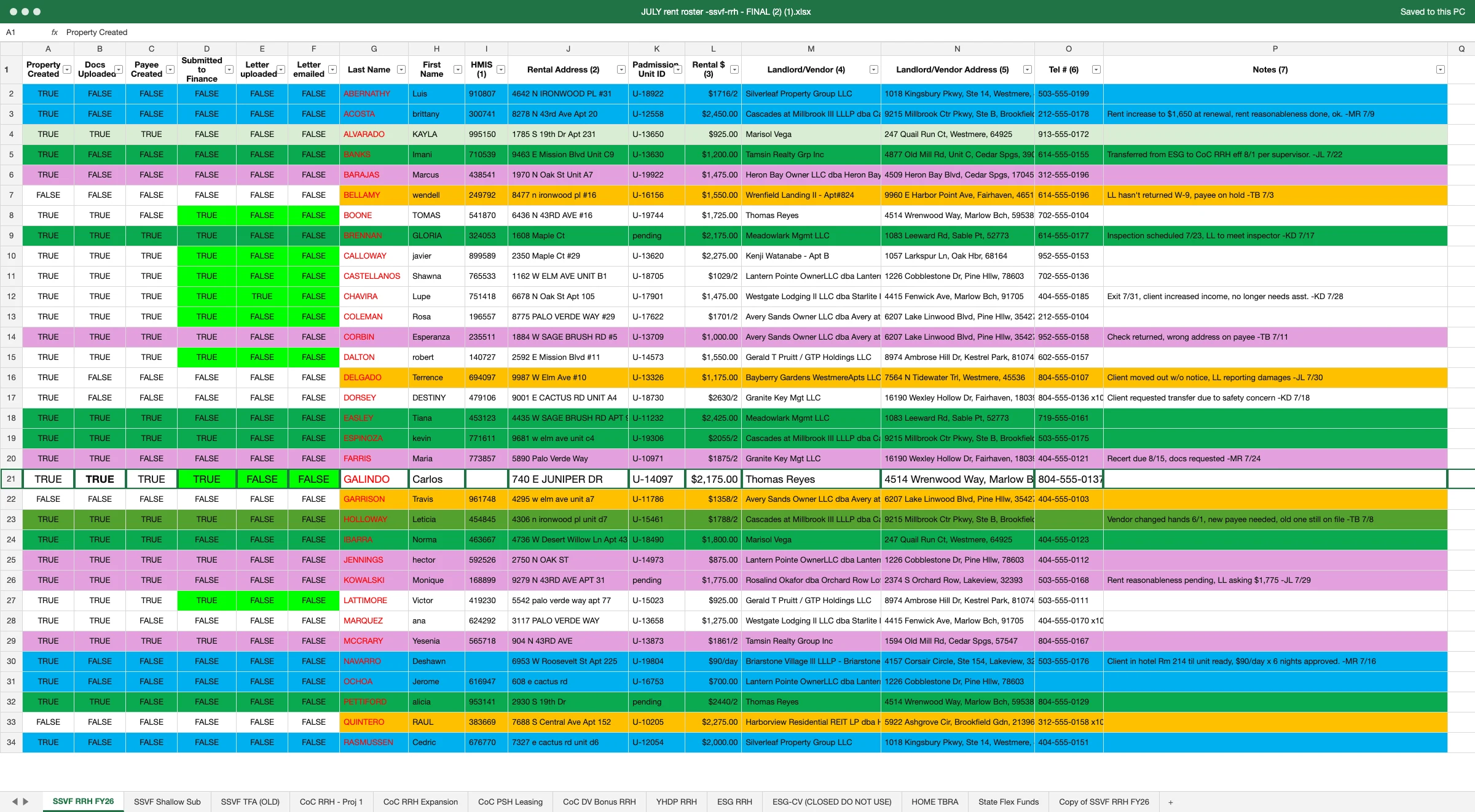
Every payment from a shared roster has to clear three questions: is the household where the sheet says, is the payee right, and can this grant pay for this expense. On a spreadsheet, each answer lives with a different person.
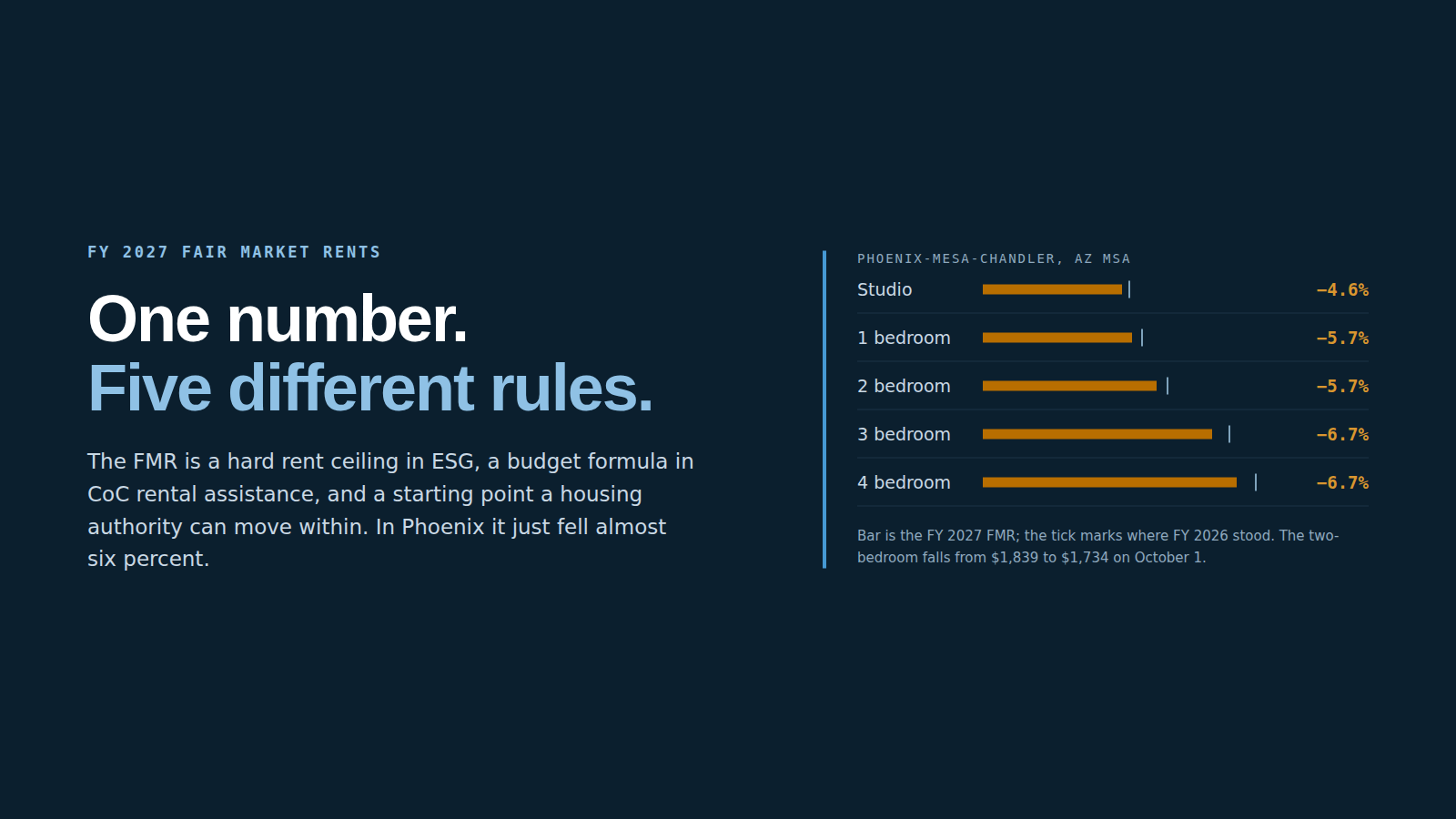
HUD published the FY 2027 Fair Market Rents today. ESG treats them as a hard ceiling. CoC rental assistance uses them to size the grant. HCV can price by ZIP. About a third of the country lives in an area where the FMR went down. Phoenix is down almost six percent, which makes the difference easy to see.

HUD CoC and ESG programs reached their October 1, 2026 compliance date working against a standard written for the Housing Choice Voucher program. That is a governance problem before it is an inspection problem.

Under HQS, whether a unit passed often depended on who inspected it. Under NSPIRE the standard decides — and it decides differently than the HQS checklist did, with more spaces and aspects to check.

Permanent housing assistance is the most effective tool we have to end homelessness. The challenge today isn't commitment or expertise — it's the absence of systems built to carry the work as it actually exists.

When dozens of providers each solve the same compliance-heavy problems independently, fragmentation surfaces at the system level. Centralized rental assistance administration is the structural response.
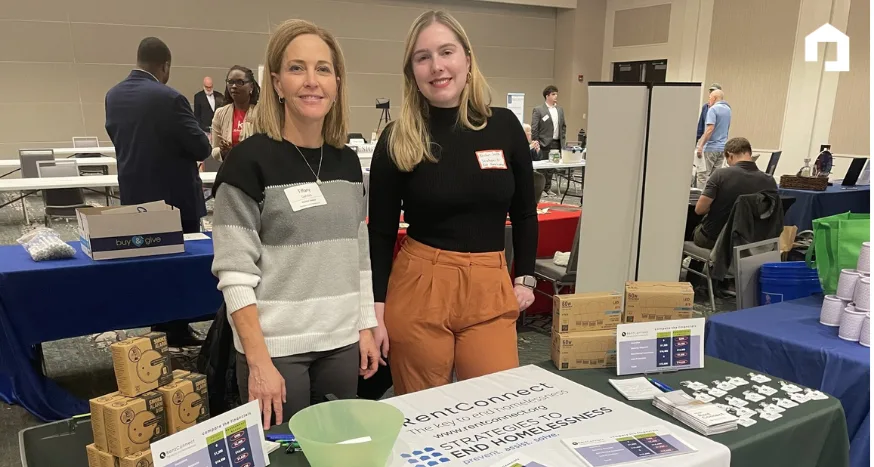
How RentConnect uses Padmission Connect to coordinate landlord relationships, unit access, and housing search across 30 partner agencies.
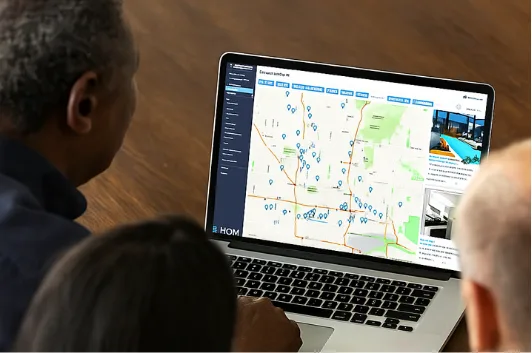
In communities across the country, Padmission Connect is helping housing programs put choice back into the hands of the people they serve.

Padmission Connect is the software local agencies use to enable owners and operators to offer their units to rental assistance program tenants — here's how those partnerships work.
Common questions
How long can SSVF pay rent?
Up to six months in any 12-month period and ten months in any two-year period, or nine months in 12 and twelve in two years for households at or below 30% of area median income, under 38 CFR 62.34. Arrears can be paid and count toward the limit. Shallow subsidy is a separate track: up to 50% of reasonable rent for two years.
How often do SSVF participants have to be recertified?
At least once every three months, under 38 CFR 62.36(a). The grantee recalculates income against the limit and confirms the household still needs the assistance. Shallow subsidy households are the exception: they run for two years without recertification.
What inspection standard does SSVF use?
Before new rental, utility or deposit assistance is paid, the unit is inspected against the habitability conditions in 24 CFR 583.300(b), no later than three working days after the unit is identified. No certified inspector is required, and a passing inspection under another federal, state or local housing program in the past two years can stand in, per 38 CFR 62.36(f).
Can SSVF pay a veteran directly?
No. Rental assistance is paid by the grantee directly to the third party to whom rent is owed, under 38 CFR 62.34(a)(2), and the other assistance categories follow the same rule: the landlord, the utility company or the vendor is paid, never the participant.
Is HMIS enough to administer SSVF?
HMIS is required, and it records services and each assistance payment for the monthly upload to VA, per VA's SSVF data guide. It does not make the payment. That runs through the agency's accounts payable, so the eligibility record, the payment and the HMIS entry are kept in three places that have to agree.
Housing program administration
Eligibility, income examinations, rent calculation, inspections, payments and the record that has to hold up afterward — the work between the tools, and who keeps it correct when the rules change.
Go to housing program administrationHOTMA compliance
Which HOTMA provisions actually reach CoC, ESG, HOPWA, HOME and HTF — the applicability question that has to be settled before any of the income and asset changes can be implemented.
Go to hotma complianceHousing search
How a Continuum runs housing search across providers — a live list of available units, navigators who can act on it, and participants choosing where they live rather than being placed.
Go to housing searchSee SSVF administered in Journey
Bring the way a TFA request moves today, from case manager to check. We will walk through what Journey would carry and what stays with your staff.