Owners see the results of a housing program’s promises directly. The rent payment arrives on the first or it doesn’t. The tenant pays their share or doesn’t. The inspector shows up on the scheduled day, or the owner waits in an empty unit. Landlord communication is how a program shows it is doing that work, and how it hears about a problem while it’s still small enough to fix.
I spent four years leading landlord relations at HOM, Inc., where we built Threshold, a centralized landlord engagement service.
Regular contact makes the hard conversations easier
Regular contact is worth more than any single message it carries.
Owners are ready before big changes land. A new inspection standard, a shift in what a tenant pays or a funding delay reaches owners who already hear from you, so it reads as the next update from a program they know.
Owners learn how your program works. When payments post, how to report a maintenance issue, what an inspector looks at: a regular update sets those expectations for every owner at once, and staff spend less time correcting them one owner at a time.
Owners start to act like partners. They call you first when something goes wrong.
In Indianapolis, RDOOR Housing Corporation runs HomeNow Indy, where one Housing Acquisition team cultivates, onboards and supports landlords on behalf of every provider in the CoC — a centralized landlord engagement model. Breya Birdsong, RDOOR’s Vice President of Rental Assistance Programs, names the shift in how the team positions owners that made it work:
“Landlords round out the rehousing team, they are not external to the process. They should feel empowered, supported and a part of the team. Good landlord engagement helps with retention of units and more opportunities to house people.”
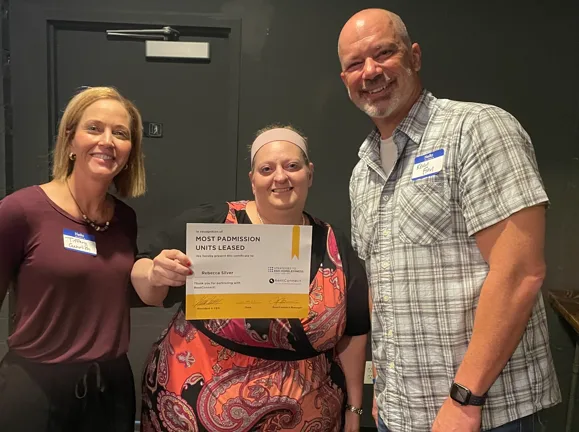
Owners see the results directly, so promise only what the program delivers
An overpromise costs more than the plain truth would have. Owners know whether the payment was late, whether the tenancy went the way you said it would, and whether anyone called when the unit failed inspection. One tenancy that goes worse than promised can cost you an owner’s whole portfolio, and owners talk to each other.
Honesty starts with the pitch. When you recruit an owner, sell the program as it is: what it pays and when, what your staff will do, and what happens if a tenancy gets hard. An owner recruited on “these tenants will be no trouble” leaves after the tenant’s first late payment and tells other owners why.
Never overpromise what you don’t know about a tenant, and be careful not to overshare what you do know. Both mistakes happen the moment an owner asks what a tenant is like. What a household told their case manager stays with the program, including any concern about past behavior, and nobody can promise how any renter will act. The honest answer is that the household applies and is screened like any other applicant, and the program is there if things go sideways.
| The owner asks | Avoid | Try |
|---|---|---|
| “Is this tenant going to be a problem?” | Overpromising: “No, she’s great. You won’t have any issues.” Oversharing: “She had some trouble at her last place, but she’s working on it.” | “She goes through your normal screening, like any market-rate applicant. If anything goes sideways, call me and we’ll work it out together.” |
| “What if they stop paying their part of the rent?” | “That won’t happen with our tenants.” | “Your rental assistance payment is separate from the tenant’s share. If their part is late, call me that day and we’ll work with the household. If anything changes on the program side, you’ll hear it from us first.” |
| “Do you screen these tenants?” | “We only send you the best ones.” | “You apply your normal screening criteria, like you would for anyone. We help the household put a complete application in front of you.” |
Promise your response, never an outcome you don’t control.
If payments are late, say so. An honest update beats silence. Nothing but the payment itself fixes it; the update decides whether the owner stays.
Partnership Home, the collaborative applicant, HMIS and Coordinated Entry lead for the TX-601 Continuum of Care in Tarrant County, had to win over its own staff before its owners: navigators there used to keep “secret landlords” to themselves. In the Unlocked story on how that changed, Kimberly Doty, Director of Housing, ties staying in front of owners to both halves of the job:
“It is crucial to stay front facing with landlords to build a strong foundation of trust. This helps prevent eviction for the clients and builds trust with the landlord to come to you in times of need.”
Call first, then confirm in writing
A phone call gets to the real concern fastest, and a same-day email makes it stick. An owner who asks on the phone when the payment will post may really be asking whether the program is still funded. You hear that in thirty seconds. An email thread takes three replies to get there.
Put it in writing whenever the conversation involves a date, a dollar amount, an obligation on either side, a policy change, a tenancy issue or anything you might need to point to later. The recap takes three lines: what we discussed, what happens next, and who does it by when.
Call first. Confirm in writing the same day. Log both on the owner’s record so the next person can see them.
When something goes wrong, solve it with the owner
Treat an owner’s complaint as a problem the two of you are going to fix. Owners call when something has cost them money or time: a late payment, a failed inspection, damage to a unit, a tenant who has stopped paying their share. A defensive answer turns that call into an argument about whose fault it was, and the problem waits while you have it.
Start with what the owner needs next. Say what the program will do and by when, then do it and call back. Give them what moves the problem forward: the payment date, the reinspection slot or the name of the person handling the claim.
Let the contract carry the legal weight. The HAP contract or rental assistance agreement already sets out what the program pays, what the owner has agreed to, and what happens when either side falls short. Those protections belong to both sides and hold whatever is said on a call. When a conversation turns to who owes what, point to the contract and read the relevant part together. That leaves you free to spend the call on the relationship and the fix.
The more you talk, the easier the hard conversation gets. Every routine update is practice for the difficult one. An owner who already knows how the program works, who you are and that you call back starts the hard call with the problem in front of both of you.
Regular channels set expectations before anyone needs them
The channel matters less than the rhythm, so pick what your team can keep up.
Email updates, in the same format every time
Monthly or every two weeks: the payment calendar, upcoming inspections, any program change and one practical tip, laid out the same way each issue so owners learn where to look.
Virtual training, recorded for owners who miss it
Onboarding for new owners and short refreshers when a rule changes. HomeNow Indy’s Housing Acquisition team invested in training so owners felt confident updating their own unit information.
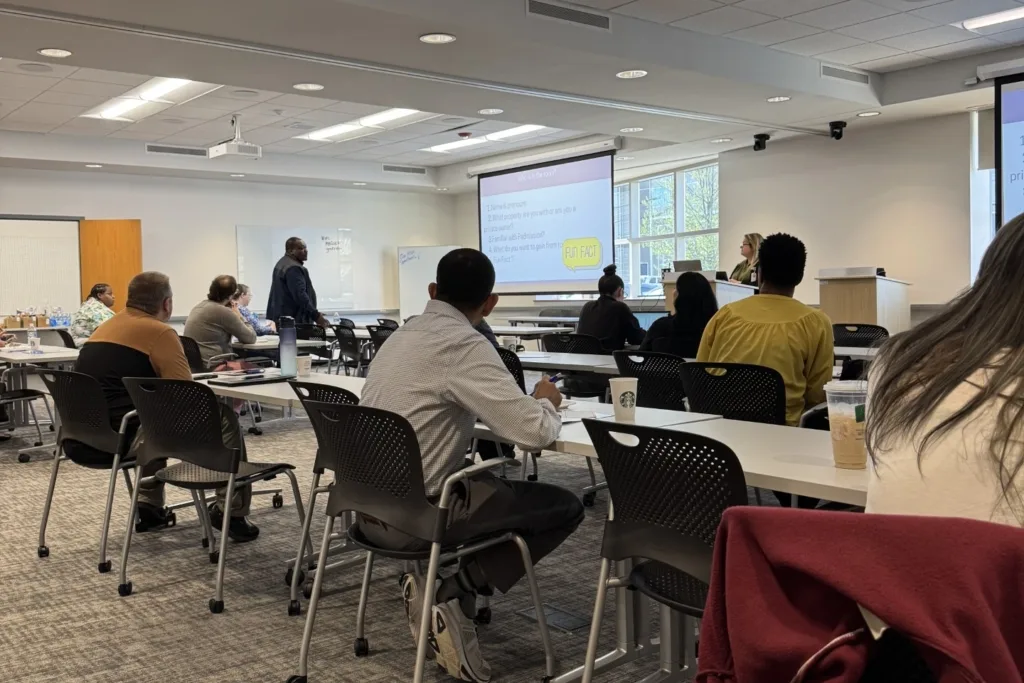
In-person events put faces to the program
Owner appreciation events, landlord forums and real estate association meetings are where owners meet the people behind the payments.

An owner resource page, so owners look before they call
Threshold keeps a blog, owner FAQs and an email sign-up on one site, so owners have somewhere to look before they pick up the phone.
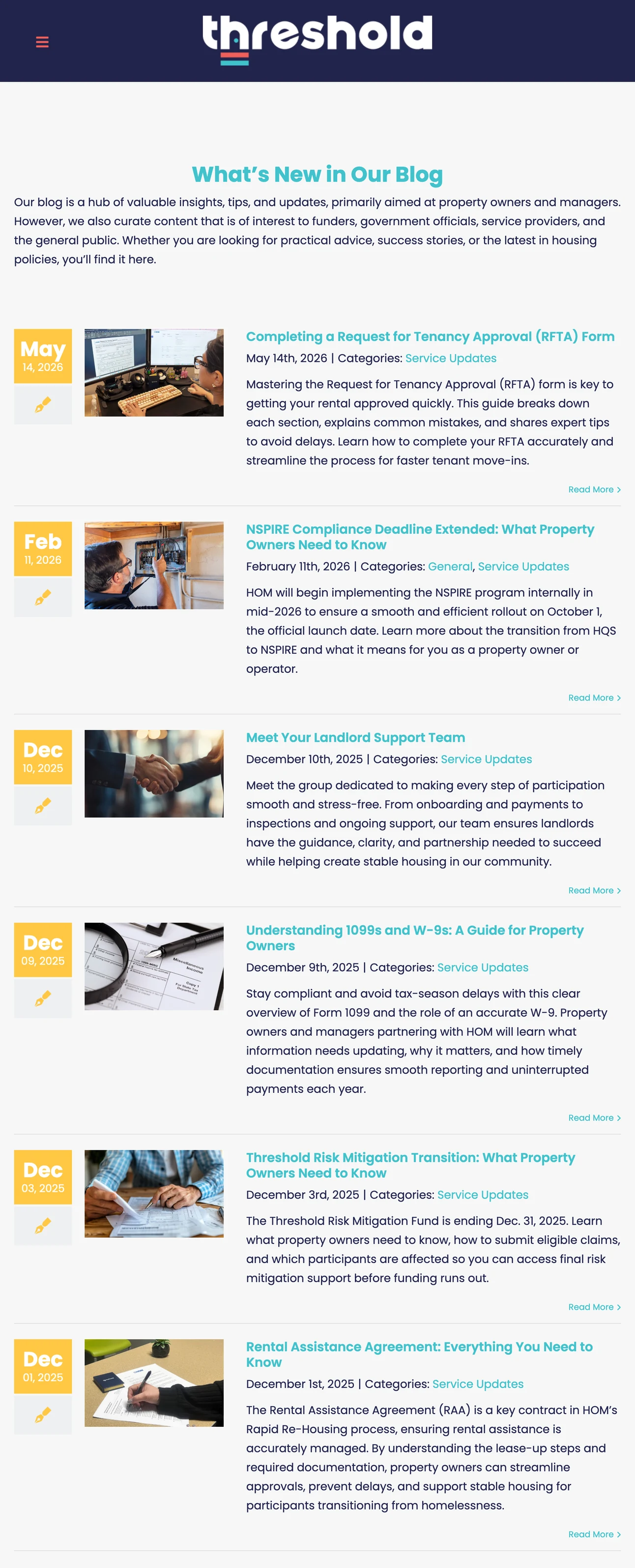
Once the rhythm exists, a big change already has somewhere to go. The week a rule changes is the wrong week to build a mailing list.
Owners read what sounds like a person wrote it
Write to owners the way you’d explain it across a desk. Keep it professional and simple, and say “we” and “our program.” Explain an acronym once or drop it. Put what changes for the owner first and the reason second.
| Instead of | Try |
|---|---|
| “Due to HOTMA implementation, the participant’s TTP has been recalculated effective 01/01, resulting in an adjusted HAP amount.” | “Starting January 1, your tenant will pay $40 more toward the rent each month, and our payment to you will go down by $40. The total rent in your lease stays $1,250. You’ll see the new amounts on your January statement.” |
Plan the notice to match the size of the change
Decide how early owners hear about a change by how much it asks of them. A change owners have seen before can be explained when it happens. A change to how their units are inspected can mean repairs to budget and schedule, and that needs a plan that starts months ahead.
The bigger the change, the earlier owners should hear about it, and the more ways they should hear it.
| Size of change | Example | When owners hear | How |
|---|---|---|---|
| Routine | A tenant’s share of the rent changes at recertification | When it happens | A call or letter with the new amounts and the date they start |
| Moderate | A new payment date, form or way to submit documents | A month or two ahead | An email with the details, and a reminder the week before |
| Major | A move from HQS to NSPIRE inspections | Six months ahead | An email and a blog post six months out, a recorded virtual training three months out, and optional walkthroughs with an inspector in the final month |
Plan a major change back from its launch date on the day you learn of it: who writes the first email, when the training runs, which inspectors lead the walkthroughs and how owners sign up. If the date moves, as NSPIRE’s has more than once, send the new date through the same channels and move every step of the plan with it. When a change is already weeks away, as NSPIRE is for CoC and ESG programs on October 1, compress the same steps rather than skip them: the email this week, a short training within the month.
What to tell owners about NSPIRE, HOTMA and the CoC competition
As of September 24, 2026.
Owners will ask what each of these does to their payments, and that answer is easier to give before it arrives.
NSPIRE: tell owners what the inspector will do differently
CoC and ESG programs move to the NSPIRE inspection standard on October 1, 2026.
Skip forwarding the rule or a list of deficiency codes; it reads as homework. Tell owners what the inspector will do differently, which items to check now and who to call. Carbon monoxide alarms and hardwired or sealed 10-year-battery smoke alarms are already required, NSPIRE or not, and missing GFCI protection near water and water-heater discharge-piping defects are the common failures. Our comparison of HQS and NSPIRE walks through each of those items, with the severity and correction window NSPIRE gives it. Those correction windows are the voucher program’s; HUD has not published the promised CoC- and ESG-specific standards, so don’t hand owners a repair deadline yet. Owners will also ask whether a failed item holds the payment; answer from your program’s written standards.
HOTMA: the split may change, the lease rent does not
Full compliance for CoC and ESG programs is January 1, 2027. Changes to how income and deductions are calculated may change some households’ share of the rent once the program applies the new rules.
Saying nothing means the owner finds out when the payment amount changes. Explain instead that the tenant’s share and the program’s share may change, that the total rent in the lease stays the same, and when they’ll hear about a new split. Before you tell an owner a split will move, check which HOTMA rules apply to CoC and ESG: the income and asset changes land differently from one program to the next.
The CoC competition: owners will ask whether the payments keep coming
HUD reopened the FY 2026 competition on September 18 after the First Circuit granted a stay pending appeal. The general application deadline is September 30, and the appeal itself is still undecided. An owner who follows the news will ask whether the program is still funded and whether their payments continue.
Skip the litigation news, and skip “we’ll update you when we know more” with nothing else in the message. Answer the payment question first with what is true for your program today. If payments on current leases continue as scheduled, say so, and promise a call before anything about their units changes.
If it isn’t logged, the next person starts over
A relationship that lives in one staff member’s inbox leaves with that staff member. Log calls, recaps, training attendance and issues on the owner’s record so whoever picks up the relationship knows what was promised. When several agencies call the same owner separately, the owner experiences system fragmentation firsthand. One shared record fixes that.
Cincinnati’s RentConnect has held landlord relationships for Strategies to End Homelessness and its 30 partner agencies since 2023, which is more relationships than any one person can keep in their head. Tiffany Gehrlich, RentConnect Manager, on what keeps them from slipping:
“The CRM has been crucial to building and maintaining relationships with property partners. It’s an easy to use tracking system to ensure no partner relationships fall through the cracks, especially as the number of partners increases.”
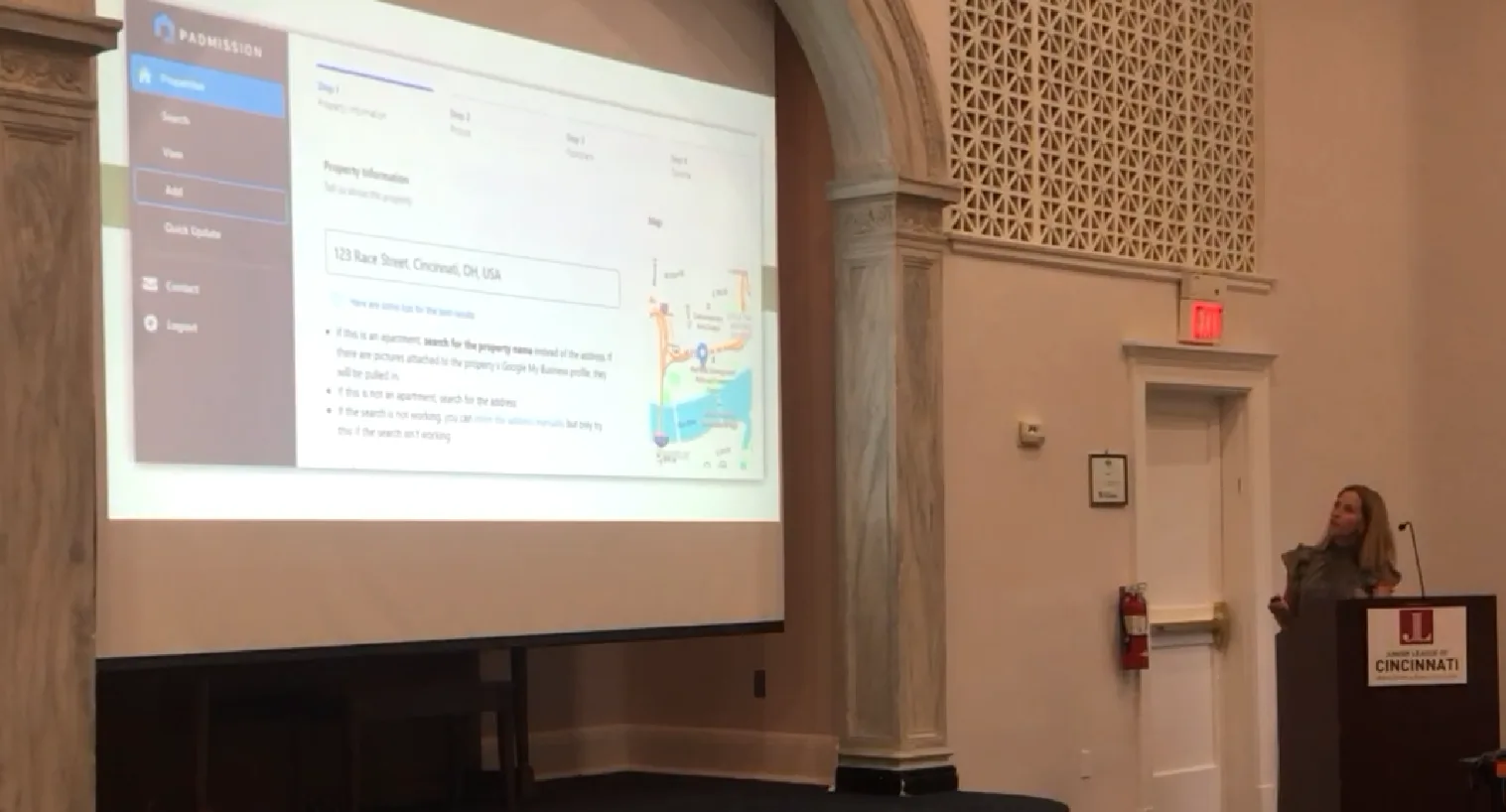
In Padmission Connect, housing locators add notes to each property’s history, alongside the system’s own record of changes, and set tasks for follow-ups. The Outdated Properties list shows which owners haven’t updated their units lately, a good place to start calling. On the administration side, the property owner and manager portal in Padmission Journey lets owners check payments, holds and inspection results themselves, so fewer routine questions reach staff.
Frequently asked questions
How often should a housing program communicate with landlords?
At least monthly, in a consistent format, plus a direct call whenever something changes for a specific owner or unit.
What should always be put in writing with a landlord?
Anything involving a date, a dollar amount, an obligation, a policy change or a tenancy issue, recapped the same day with what was agreed and who does what next.
What should a program tell a landlord about a tenant?
That the tenant goes through the same screening as any other applicant, and that the program is there if the tenancy runs into trouble. Never overpromise what you don’t know about the tenant, and be careful not to overshare what you do know.
How far ahead should a program tell landlords about a change?
It depends on how much the change asks of them. A routine change, like a tenant’s share of the rent moving at recertification, can be explained when it happens. A major one, like a new inspection standard, deserves about six months’ notice: an email and a blog post first, a recorded virtual training three months out, and optional walkthroughs with an inspector in the final month.
Will NSPIRE, HOTMA or the CoC competition change what a landlord gets paid?
HOTMA can change the split between the tenant’s share and the program’s share once the program applies the new rules; the total rent in the lease does not change. NSPIRE does not change the rent, but a failed inspection can hold a payment under your program’s written standards, and whether the competition affects payments on a current lease depends on your program’s grant and renewal timing, so tell owners exactly what is true for your program today.
In practice: one month of owner contact
- First week: the monthly update goes out with payment dates, scheduled inspections and one change explained in two sentences.
- Any day: a tenancy issue comes up. The housing locator calls the owner, sends a three-line recap that afternoon and logs both.
- Mid-month: a thirty-minute session on the new inspection standard, recorded for owners who missed it.
- Month end: staff call every owner who hasn’t had a call from anyone in sixty days.
- Each quarter: an in-person owner event.
If you’re building a shared landlord record across several agencies, book a conversation and we’ll walk through how Padmission Connect keeps it in one place. For how a CoC runs landlord engagement once on behalf of every provider, from winning provider buy-in to partnering with real estate associations and measuring the result, start with our guide to centralized landlord engagement for CoCs.