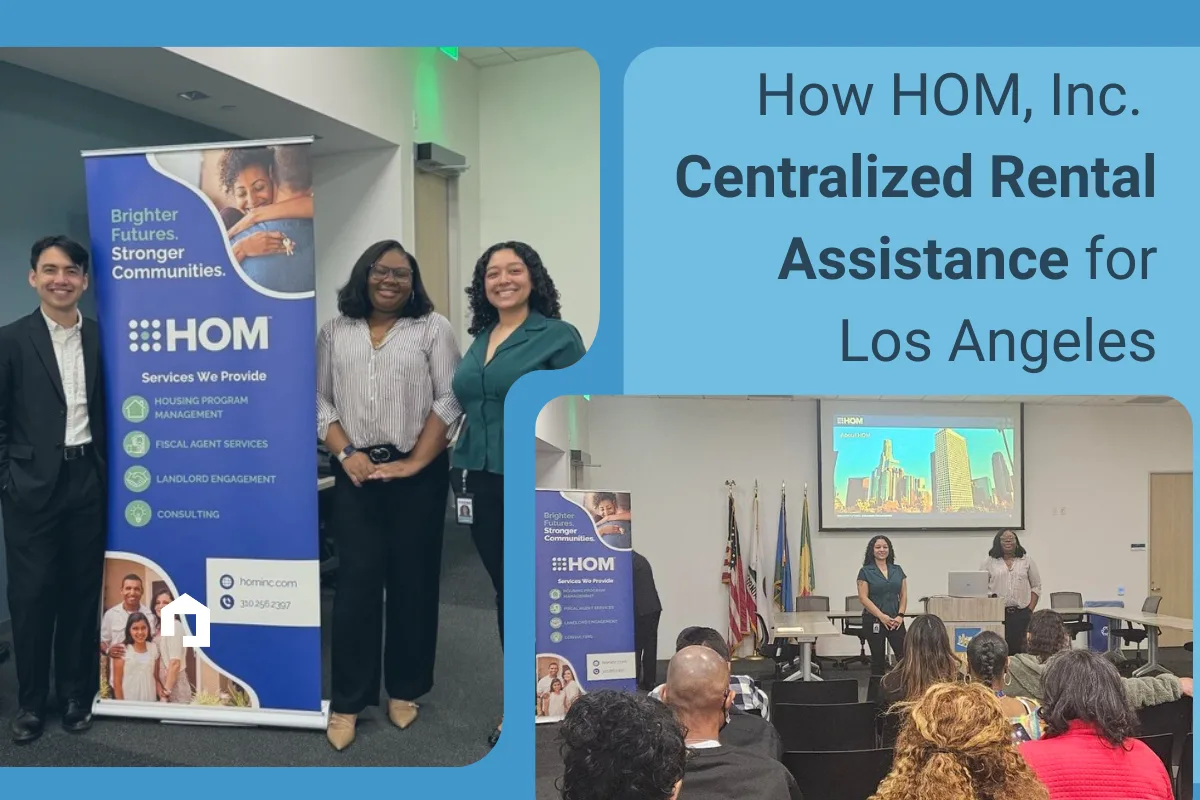
When the Los Angeles Homeless Services Authority decided to move its Time-Limited Subsidy program to a centralized fiscal agent model, the problem it was solving wasn’t primarily about speed or cost. It was about the fact that rental assistance administration looked different at every provider.
The TLS program — what most practitioners in other communities know as rapid rehousing — supported over 5,000 households across multiple service provider organizations. Each provider managed its own landlord relationships, processed its own payments, and applied its own workflows. Some used ACH; most didn’t. No two providers generated tenancy and payment data in formats the other could reconcile against. When LAHSA needed program-level visibility — for utilization, reconciliation, compliance reporting, audit readiness — there was no single record to go to.
That’s the structural problem centralized rental assistance administration solves. But centralizing rental assistance across a multi-provider network doesn’t happen by simply appointing a fiscal agent. It requires a technology layer that can hold the operational standard every provider is now expected to meet.
What the Program Actually Looked Like
LAHSA’s TLS program means thousands of active leases, ongoing step-down subsidy management, landlord payment execution, and participant subsidy redeterminations — distributed across service provider organizations with varying administrative capacity and few shared operational standards.
Providers weren’t doing this wrong. They were doing it the only way the prior model allowed: independently. Each organization owned its piece of the program — landlord relationships, payment processing, compliance tracking. The result was a program that functioned differently depending on which provider a household was enrolled with, and gave LAHSA no reliable way to see across all of it.
What Was Broken Structurally
The inconsistency wasn’t a training problem or a staffing problem. It was an architectural one.
When rental assistance administration spreads across individual providers without a shared operational layer, compliance obligations are distributed too. Every payment, every subsidy adjustment, every step-down calculation happened in a separate workflow. LAHSA’s ability to reconcile, audit, or assess program performance depended on collecting and comparing data from organizations that weren’t generating it in compatible formats.
With 2,500 households in scope for the centralized launch alone, the scale made informal coordination untenable. The program needed a single operational standard — and that standard had to live somewhere other than a policy document.
The Structural Change
LAHSA procured HOM, Inc., as a centralized fiscal agent for the TLS program for opt-in providers. The model shifted payment execution, landlord management, and compliance workflows from individual providers to a centralized administrative function. But the model only works if the technology running it can carry the operational complexity of a multi-provider, multi-program rental assistance system.
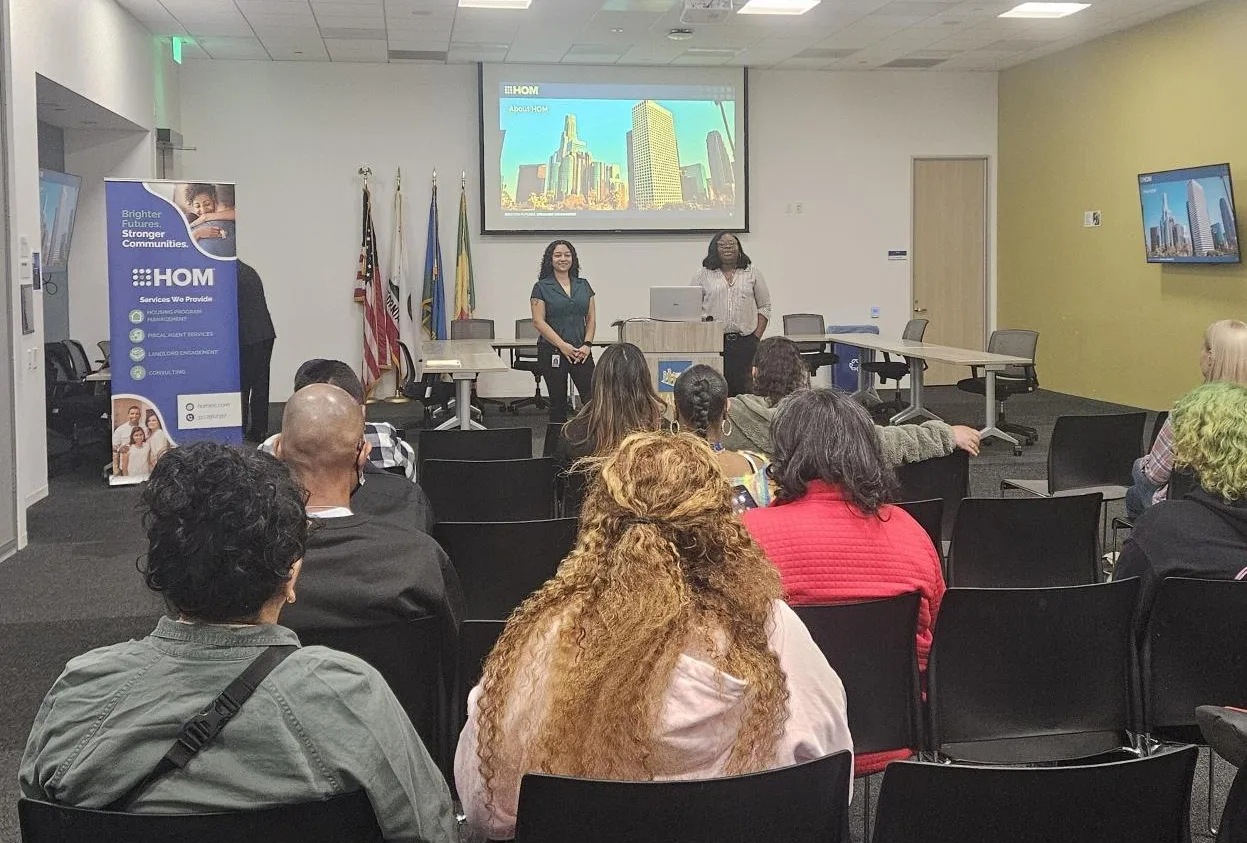
HOM built the centralized operation on Padmission Journey. Brian Petersen, COO and President at HOM, Inc., reflected on the implementation:
“Journey enabled us to respond to the LAHSA RFP with confidence because it provides a proven, repeatable framework for centralized rental assistance administration.”
The pre-launch work was substantial. The team reviewed, normalized, and migrated tenancy and payment data from each participating service provider — households, properties, units, leases, rental assistance amounts — into Journey in a consistent format. HOM designed and tested a two-way integration with LAHSA’s HMIS. HOM assigned accounting codes and expense categories across the program, collected and configured landlord payment preferences, and trained and validated support team workflows against the new operational model.
This is what technology-enabled system design looks like in practice: not a software deployment in isolation, but the deliberate encoding of an operational standard into a technology layer that every role in the new model runs on. The policy didn’t change how providers operated. The system did.
The July 1st launch — a hard deadline tied to the LAHSA fiscal year — required all of this to happen within 90 days of contract execution. Carlos Gonzalez, Senior VP of Housing for HOM, knew it was ambitious:
“Journey helped us execute on our commitments to landlords by receiving payments faster and with clearer communication early.”
How Work Changed Across Roles
For LAHSA’s finance team: Program-level financial visibility became accessible in a single record. Payment status, subsidy amounts, participant contributions, and reconciliation data — all previously requiring coordination across multiple organizations — now lived in one place. Audit readiness shifted from periodic, labor-intensive exercises to near-continuous operational conditions.
For service providers: The shift removed payment processing and landlord management from providers’ administrative workload. Providers no longer managed rent payments; they managed participants. Gonzalez notes:
“Journey helped us bring consistency to provider workflows without disrupting day-to-day service delivery.”
Sarah Hoppmeyer from Union Station Homeless Services described the shift:
“We’re best when we focus on our client needs. HOM’s solution allows us more time to serve our clients and landlord partners.”
For landlords: Payment execution moved from provider-by-provider timelines to a single centralized process. ACH participation increased from under 20% before launch to over 60% within three months. Thomas Harrison, Associate Director of Leasing at SOLA Impact:
“The difference with HOM, Inc has been night and day…payments are timely and transparent. This is a monumental improvement.”
For HOM’s administrative team: Journey provided a single system for managing the full operational complexity of the TLS program: payment execution, subsidy adjustments, step-down management, new move-ins, unit changes, and program expansion.
What This Demonstrates
The LAHSA TLS centralization worked because HOM and LAHSA designed the operational model and the technology together, not in sequence.
Most efforts to standardize rental assistance across a provider network stall at the same point: the policy exists, the intent is clear, but there’s no shared system that translates the standard into daily workflows. Data stays inconsistent. Compliance remains distributed.
What HOM and LAHSA built demonstrates what centralized rental assistance administration requires: data in one place, workflows that are standard by design, and a technology layer built specifically for how rental assistance programs operate — not adapted from something built for a different purpose.