
Unlocked: How Indianapolis Centralized Rehousing Through HomeNow Indy

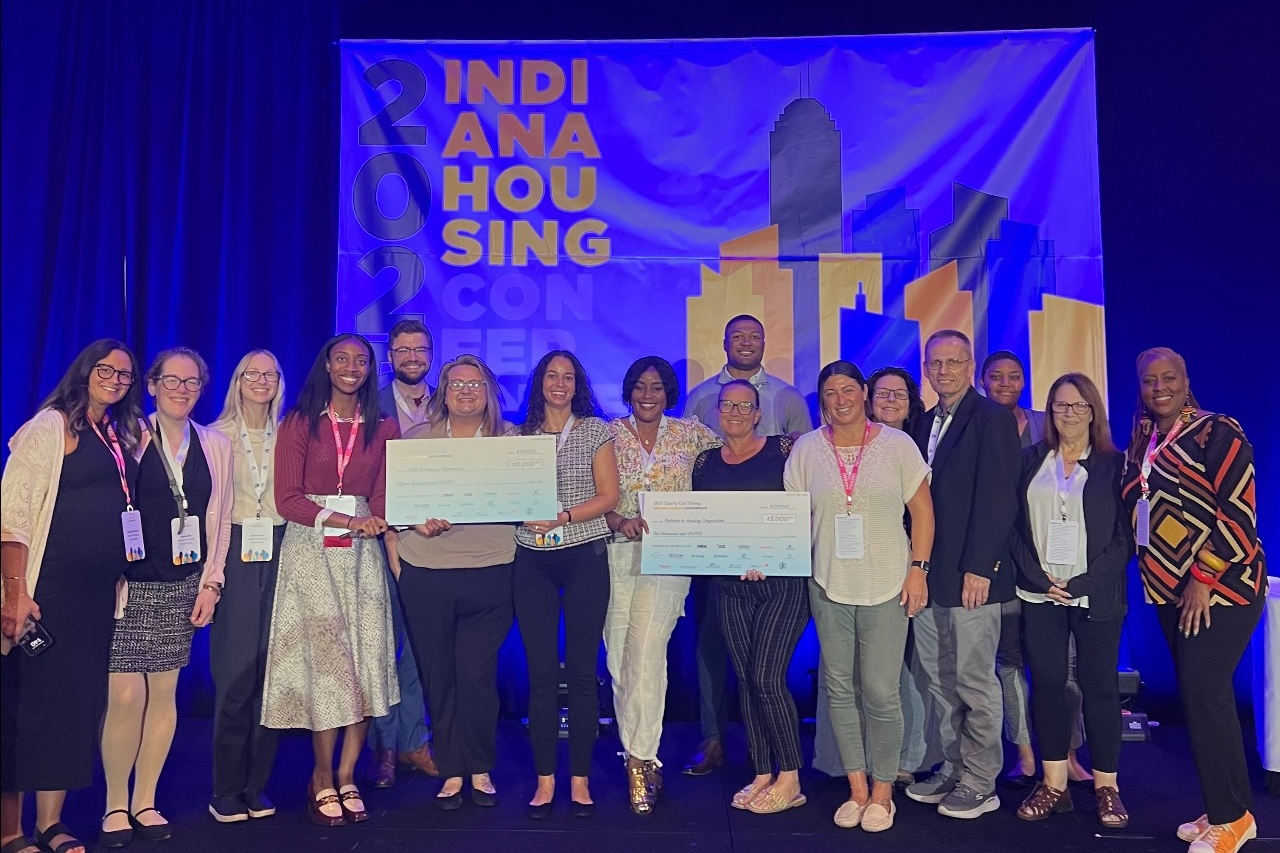
Breya Birdsong (fourth from the left) and the RDOOR team receive formal recognition for the impact they have had creating and implementing HomeNow Indy. Birdsong, VP of Rental Assistance Programs, shares her expertise and experience in this article.
Building trust, system capacity, and faster rehousing through shared infrastructure
In our Unlocked series, we highlight communities that have rethought how housing systems operate—moving away from fragmented, provider-by-provider approaches toward coordinated models that support people faster and more consistently.
In Indianapolis, that shift took shape through HomeNow Indy, a citywide rehousing initiative designed to reduce the length of time people experience homelessness by centralizing landlord engagement, strengthening coordination, and expanding permanent housing choice.
We spoke with Breya Birdsong, Vice President of Rental Assistance Programs at RDOOR Housing Corporation, about how HomeNow Indy operationalized this vision—and the role Padmission Connect plays as shared system infrastructure.
From Vision to Infrastructure: Why HomeNow Indy Was Created
In 2020, the City of Indianapolis partnered with RDOOR Housing Corporation and the Coalition for Homelessness Intervention and Prevention to launch HomeNow Indy. The goal was ambitious but clear: build a coordinated, system-wide approach to rehousing individuals and families experiencing homelessness.
“HomeNow Indy is a coordinated, system-wide approach to rehousing individuals and families experiencing homelessness in Indianapolis.”
— Breya Birdsong, Vice President of Rental Assistance Programs, RDOOR Housing Corporation (Indianapolis, IN)
Like many Continuums of Care, Indianapolis already had committed providers, strong programs, and engaged funders. What it lacked was shared infrastructure—the connective tissue that allows dozens of agencies and hundreds of landlords to operate as a single system.
The Problem: When Every Provider Has to Solve the Same Challenge
Before HomeNow Indy, landlord engagement and housing navigation were largely decentralized.
“The Indianapolis CoC did not have a centralized infrastructure to handle all landlord engagement needs or housing navigation. Efforts were siloed, and many service providers were left to handle all tasks related to the rehousing process separately.”
Efforts reflected system fragmentation across the homelessness response system. This fragmentation created predictable system strain:
-
Multiple providers contacting the same landlords independently
-
Inconsistent messaging to property owners
-
Housing knowledge tied to individual staff rather than the system
-
Case managers spending disproportionate time on housing search
-
Capacity constraints slowing placements across programs
“There were capacity challenges, and the goal was to create a centralized team to lift the burden on our CoC service providers to create a more efficient rehousing process.”
HomeNow Indy was designed to address this at the system level, not by asking providers to work harder—but by changing how the work was organized.
The People Behind The Impact
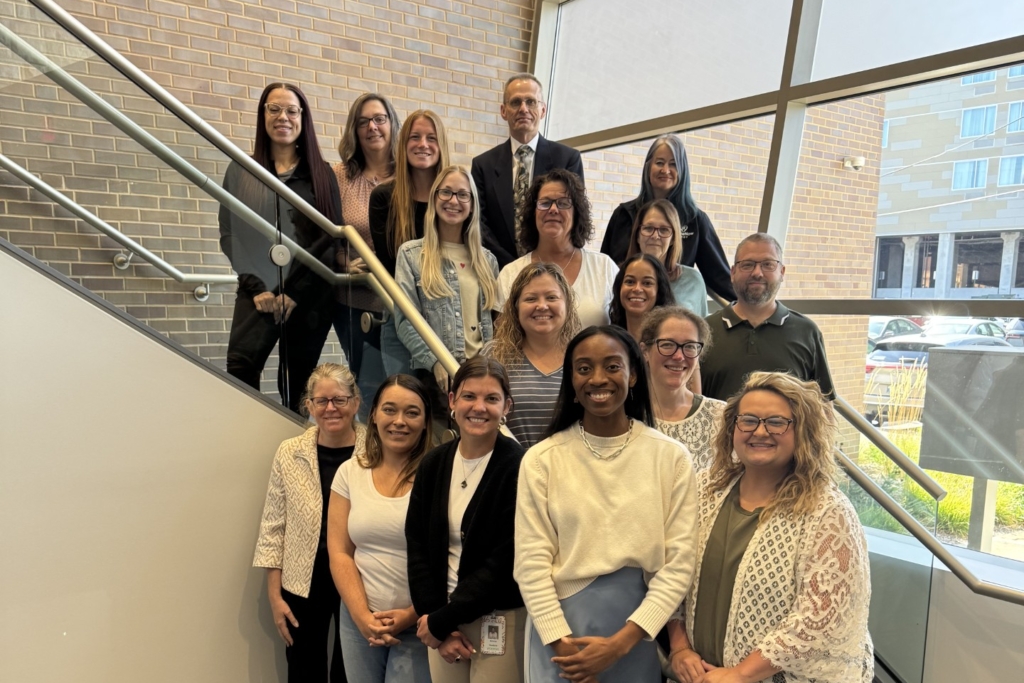
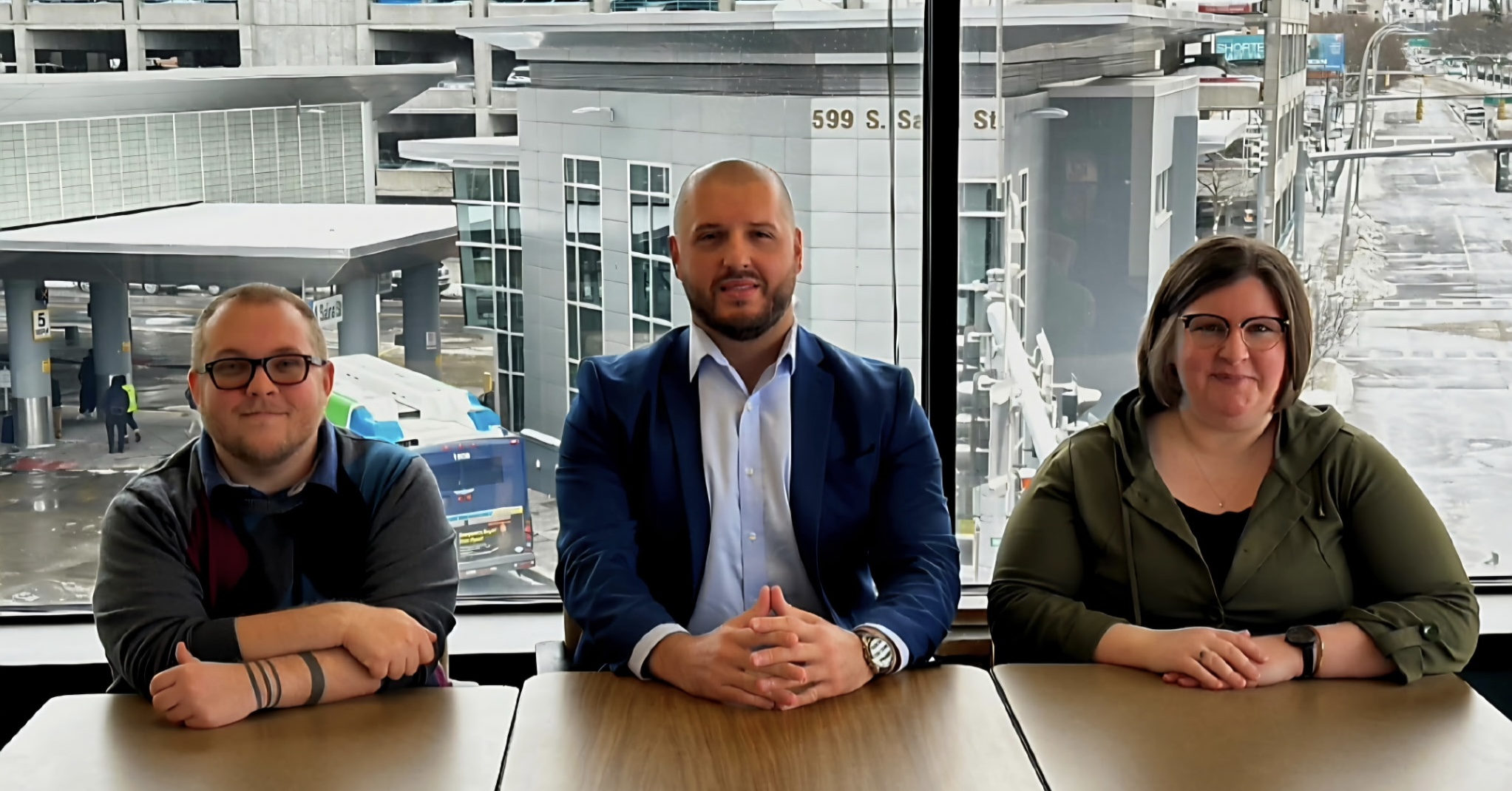
RDOOR's team has found effective ways to pull their community together, starting first with their organization. At Padmission, we believe technology cannot replace people, but it can amplify their impact.
Centralizing Landlord Engagement as a System Function
RDOOR was introduced to Padmission Connect during the development of HomeNow Indy and saw it as a way to operationalize centralization.
“Padmission Connect has allowed our CoC to modernize the way we work collectively.”
Instead of each provider building and maintaining their own landlord lists, HomeNow Indy established a Housing Acquisition team responsible for cultivating, onboarding, and supporting landlord relationships on behalf of the entire CoC.
“Centralizing landlord engagement and providing service providers with a platform that stores the units and landlord contacts that are cultivated by our Housing Acquisition team lifts the burden of doing this work alone.”
This shift created immediate value across the system:
-
Providers could focus on client support rather than cold outreach
-
Landlord relationships became system assets, not individual ones
-
Knowledge persisted through staff turnover
-
Engagement strategies could be tracked and refined over time
Trust as Infrastructure: Why Centralization Worked
Centralization alone isn’t enough—it has to be trusted.
“There is a level of trust maintained in the rehousing process in utilizing Padmission Connect.”
For providers, trust came from knowing that landlords visible in the system were already onboarded and supported.
“Our community partners know that landlords are onboarded, supported and understanding of the needs required to rehouse vulnerable clients.”
For landlords, trust came from consistency:
-
Clear expectations
-
A single point of coordination
-
Reduced duplication
-
Ongoing support beyond the initial lease-up
CHIP award
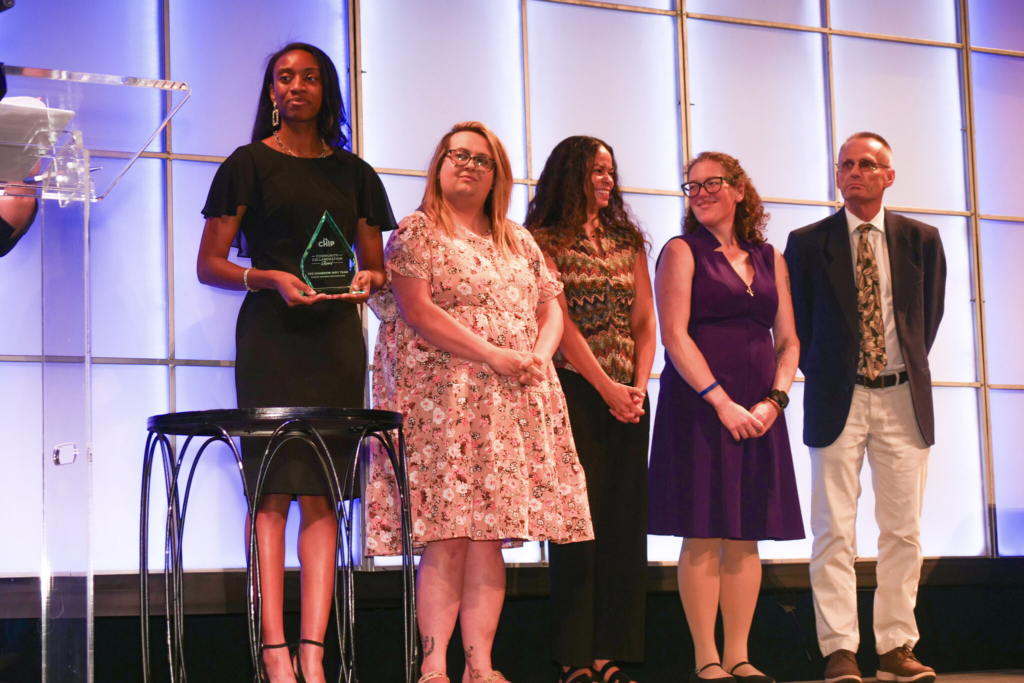
Innovative leadership and execution doesn't go unnoticed as CHIP receives formal recognition for HomeNow Indy's accomplishments.
Reframing the Role of Landlords
One of the most important mindset shifts for HomeNow Indy was how landlords were positioned within the system.
“Landlords round out the rehousing team, they are not external to the process.”
Rather than treating landlords as transactional endpoints, HomeNow Indy intentionally brought them into the rehousing ecosystem.
“They should feel empowered, supported and a part of the team. Good landlord engagement helps with retention of units and more opportunities to house people.”
This approach improved:
-
Unit retention over time
-
Responsiveness during placements
-
Willingness to lease again
-
Stability across programs and populations
Scaling Participation Without Scaling Burden
As HomeNow Indy grew, the challenge shifted from finding landlords to supporting participation at scale.
“There has been a lot of growth in how landlords use the system.”
The Housing Acquisition team invested in intentional landlord training, helping property partners feel confident updating availability and information directly.
This created multiple downstream benefits:
-
Reduced administrative workload for staff
-
More accurate, real-time housing data
-
Faster matching and fewer dead ends
-
Stronger landlord buy-in to the system
Data Visibility for System Leadership
For CoC and program leadership, visibility matters as much as volume.
“I personally use the report features to best understand trends and ensure we are meeting the needs of the CoC.”
System-level reporting supports:
-
Identifying gaps in unit availability
-
Understanding which engagement strategies work
-
Aligning housing acquisition with program needs
-
Supporting data-informed planning and funding decisions
Rather than relying on anecdotal updates, leadership can see how the system is performing as a whole.
Supporting Client-Centered Housing Search
Centralization did not remove choice from the process—it supported it.
“Clients have access through their case managers. We encourage them to walk through the system with their clients as it helps with the logistics of their rehousing.”
Case managers and participants can explore housing options together, enabling more intentional placement decisions.
“Supportive Service providers are encouraged to help households find units that are close to essential connections and services, in the area that they want and are affordable.”
This approach:
-
Respects client preference
-
Supports long-term stability
-
Reduces avoidable returns to homelessness
-
Aligns housing with healthcare, employment, and family supports
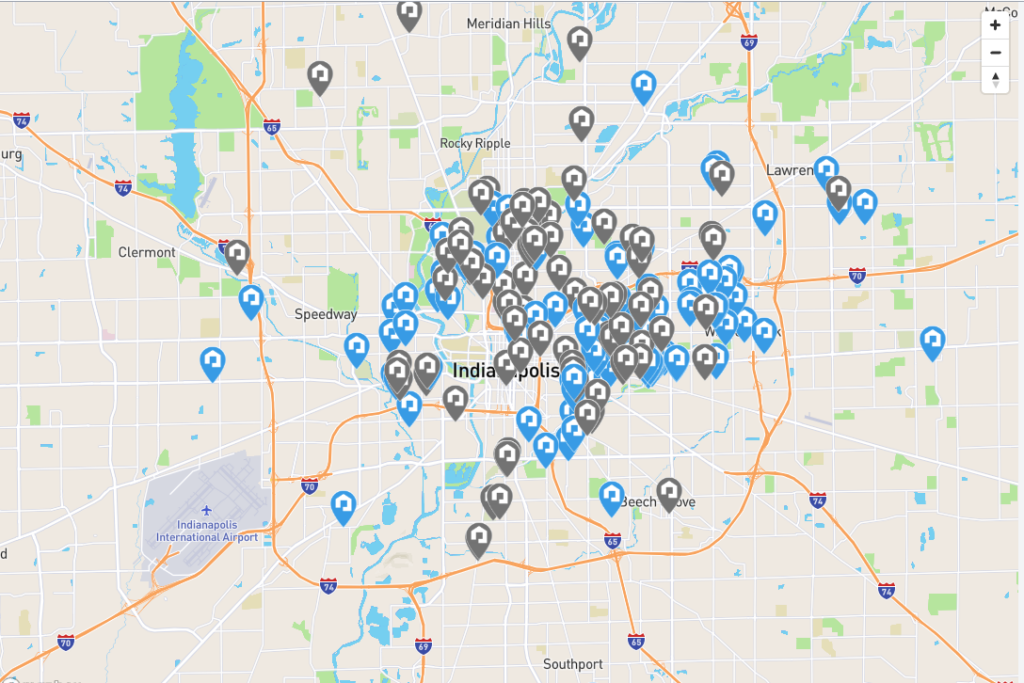
HomeNow Indy Map
HomeNow Indy has recruited hundreds of new property owners and operators to work with the Indianapolis CoC, enabling more people to find housing.
A Time-Sensitive Use Case: Housing During Pregnancy
One example connected to HomeNow Indy’s centralized housing navigation is its support for placements tied to the Healthy Beginnings at Home pilot, led by the Indiana University School of Medicine.
The initiative focuses on addressing housing instability during pregnancy—a period where delays can have significant downstream consequences.
Through HomeNow Indy’s coordinated approach, participants were able to:
-
Access housing search support quickly
-
Leverage existing landlord relationships
-
Participate in housing choice
-
Move into stable housing within weeks of enrollment
This illustrates how shared housing infrastructure enables speed when timing matters, without creating parallel systems or additional provider burden.
Learning Beyond the Platform
When asked what advice she would give other communities considering Padmission Connect, Birdsong emphasized connection—not technology.
“We find it very helpful to connect to the community of other states and teams doing the same work, and utilizing Padmission Connect!”
“There have been several meetings where we were able to engage with people experiencing the same challenges and successes, and brainstorm ways to make our process better.”
Peer learning helped HomeNow Indy:
-
Avoid common pitfalls
-
Share engagement strategies
-
Adapt ideas across markets
-
Strengthen practice beyond local boundaries
What Other Communities Can Learn
HomeNow Indy’s experience highlights several system-level takeaways:
-
Centralized landlord engagement reduces duplication and burnout
-
Shared platforms build trust across providers
-
Landlords are more effective when treated as partners
-
Data visibility supports better leadership decisions
-
Client choice and system efficiency are not opposites
-
Infrastructure enables speed without sacrificing care
Final Takeaway
HomeNow Indy demonstrates that ending homelessness at scale requires more than programs—it requires infrastructure that allows people to work together.
Padmission Connect did not replace the people doing the work. It supported them—by creating a trusted, centralized foundation that allowed Indianapolis to move faster, work smarter, and expand housing access across the system.
About the Author:
Daniel Davis
Related Posts
Unlocked: How Indianapolis Centralized Rehousing Through HomeNow Indy
Breya Birdsong (fourth from the left) and the RDOOR team receive formal recognition for the impact they have had creating and implementing HomeNow Indy. Birdsong, VP of Rental Assistance Programs, shares her expertise and experience in this article.
Building trust, system capacity, and faster rehousing through shared infrastructure
In our Unlocked series, we highlight communities that have rethought how housing systems operate—moving away from fragmented, provider-by-provider approaches toward coordinated models that support people faster and more consistently.
In Indianapolis, that shift took shape through HomeNow Indy, a citywide rehousing initiative designed to reduce the length of time people experience homelessness by centralizing landlord engagement, strengthening coordination, and expanding permanent housing choice.
We spoke with Breya Birdsong, Vice President of Rental Assistance Programs at RDOOR Housing Corporation, about how HomeNow Indy operationalized this vision—and the role Padmission Connect plays as shared system infrastructure.
From Vision to Infrastructure: Why HomeNow Indy Was Created
In 2020, the City of Indianapolis partnered with RDOOR Housing Corporation and the Coalition for Homelessness Intervention and Prevention to launch HomeNow Indy. The goal was ambitious but clear: build a coordinated, system-wide approach to rehousing individuals and families experiencing homelessness.
“HomeNow Indy is a coordinated, system-wide approach to rehousing individuals and families experiencing homelessness in Indianapolis.”
— Breya Birdsong, Vice President of Rental Assistance Programs, RDOOR Housing Corporation (Indianapolis, IN)
Like many Continuums of Care, Indianapolis already had committed providers, strong programs, and engaged funders. What it lacked was shared infrastructure—the connective tissue that allows dozens of agencies and hundreds of landlords to operate as a single system.
The Problem: When Every Provider Has to Solve the Same Challenge
Before HomeNow Indy, landlord engagement and housing navigation were largely decentralized.
“The Indianapolis CoC did not have a centralized infrastructure to handle all landlord engagement needs or housing navigation. Efforts were siloed, and many service providers were left to handle all tasks related to the rehousing process separately.”
Efforts reflected system fragmentation across the homelessness response system. This fragmentation created predictable system strain:
-
Multiple providers contacting the same landlords independently
-
Inconsistent messaging to property owners
-
Housing knowledge tied to individual staff rather than the system
-
Case managers spending disproportionate time on housing search
-
Capacity constraints slowing placements across programs
“There were capacity challenges, and the goal was to create a centralized team to lift the burden on our CoC service providers to create a more efficient rehousing process.”
HomeNow Indy was designed to address this at the system level, not by asking providers to work harder—but by changing how the work was organized.
The People Behind The Impact
RDOOR's team has found effective ways to pull their community together, starting first with their organization. At Padmission, we believe technology cannot replace people, but it can amplify their impact.
Centralizing Landlord Engagement as a System Function
RDOOR was introduced to Padmission Connect during the development of HomeNow Indy and saw it as a way to operationalize centralization.
“Padmission Connect has allowed our CoC to modernize the way we work collectively.”
Instead of each provider building and maintaining their own landlord lists, HomeNow Indy established a Housing Acquisition team responsible for cultivating, onboarding, and supporting landlord relationships on behalf of the entire CoC.
“Centralizing landlord engagement and providing service providers with a platform that stores the units and landlord contacts that are cultivated by our Housing Acquisition team lifts the burden of doing this work alone.”
This shift created immediate value across the system:
-
Providers could focus on client support rather than cold outreach
-
Landlord relationships became system assets, not individual ones
-
Knowledge persisted through staff turnover
-
Engagement strategies could be tracked and refined over time
Trust as Infrastructure: Why Centralization Worked
Centralization alone isn’t enough—it has to be trusted.
“There is a level of trust maintained in the rehousing process in utilizing Padmission Connect.”
For providers, trust came from knowing that landlords visible in the system were already onboarded and supported.
“Our community partners know that landlords are onboarded, supported and understanding of the needs required to rehouse vulnerable clients.”
For landlords, trust came from consistency:
-
Clear expectations
-
A single point of coordination
-
Reduced duplication
-
Ongoing support beyond the initial lease-up
CHIP award
Innovative leadership and execution doesn't go unnoticed as CHIP receives formal recognition for HomeNow Indy's accomplishments.
Reframing the Role of Landlords
One of the most important mindset shifts for HomeNow Indy was how landlords were positioned within the system.
“Landlords round out the rehousing team, they are not external to the process.”
Rather than treating landlords as transactional endpoints, HomeNow Indy intentionally brought them into the rehousing ecosystem.
“They should feel empowered, supported and a part of the team. Good landlord engagement helps with retention of units and more opportunities to house people.”
This approach improved:
-
Unit retention over time
-
Responsiveness during placements
-
Willingness to lease again
-
Stability across programs and populations
Scaling Participation Without Scaling Burden
As HomeNow Indy grew, the challenge shifted from finding landlords to supporting participation at scale.
“There has been a lot of growth in how landlords use the system.”
The Housing Acquisition team invested in intentional landlord training, helping property partners feel confident updating availability and information directly.
This created multiple downstream benefits:
-
Reduced administrative workload for staff
-
More accurate, real-time housing data
-
Faster matching and fewer dead ends
-
Stronger landlord buy-in to the system
Data Visibility for System Leadership
For CoC and program leadership, visibility matters as much as volume.
“I personally use the report features to best understand trends and ensure we are meeting the needs of the CoC.”
System-level reporting supports:
-
Identifying gaps in unit availability
-
Understanding which engagement strategies work
-
Aligning housing acquisition with program needs
-
Supporting data-informed planning and funding decisions
Rather than relying on anecdotal updates, leadership can see how the system is performing as a whole.
Supporting Client-Centered Housing Search
Centralization did not remove choice from the process—it supported it.
“Clients have access through their case managers. We encourage them to walk through the system with their clients as it helps with the logistics of their rehousing.”
Case managers and participants can explore housing options together, enabling more intentional placement decisions.
“Supportive Service providers are encouraged to help households find units that are close to essential connections and services, in the area that they want and are affordable.”
This approach:
-
Respects client preference
-
Supports long-term stability
-
Reduces avoidable returns to homelessness
-
Aligns housing with healthcare, employment, and family supports
HomeNow Indy Map
HomeNow Indy has recruited hundreds of new property owners and operators to work with the Indianapolis CoC, enabling more people to find housing.
A Time-Sensitive Use Case: Housing During Pregnancy
One example connected to HomeNow Indy’s centralized housing navigation is its support for placements tied to the Healthy Beginnings at Home pilot, led by the Indiana University School of Medicine.
The initiative focuses on addressing housing instability during pregnancy—a period where delays can have significant downstream consequences.
Through HomeNow Indy’s coordinated approach, participants were able to:
-
Access housing search support quickly
-
Leverage existing landlord relationships
-
Participate in housing choice
-
Move into stable housing within weeks of enrollment
This illustrates how shared housing infrastructure enables speed when timing matters, without creating parallel systems or additional provider burden.
Learning Beyond the Platform
When asked what advice she would give other communities considering Padmission Connect, Birdsong emphasized connection—not technology.
“We find it very helpful to connect to the community of other states and teams doing the same work, and utilizing Padmission Connect!”
“There have been several meetings where we were able to engage with people experiencing the same challenges and successes, and brainstorm ways to make our process better.”
Peer learning helped HomeNow Indy:
-
Avoid common pitfalls
-
Share engagement strategies
-
Adapt ideas across markets
-
Strengthen practice beyond local boundaries
What Other Communities Can Learn
HomeNow Indy’s experience highlights several system-level takeaways:
-
Centralized landlord engagement reduces duplication and burnout
-
Shared platforms build trust across providers
-
Landlords are more effective when treated as partners
-
Data visibility supports better leadership decisions
-
Client choice and system efficiency are not opposites
-
Infrastructure enables speed without sacrificing care
Final Takeaway
HomeNow Indy demonstrates that ending homelessness at scale requires more than programs—it requires infrastructure that allows people to work together.
Padmission Connect did not replace the people doing the work. It supported them—by creating a trusted, centralized foundation that allowed Indianapolis to move faster, work smarter, and expand housing access across the system.
About the Author:
Daniel Davis