

Unlocked: How Partnership Home Uses Padmission Connect to Strengthen Landlord Engagement

At Padmission, we know that every step toward ending homelessness matters. Across the country, our partners are unlocking new opportunities for landlords, providers, and participants to connect, collaborate, and create stable housing solutions.
That’s why we launched Unlocked—a blog series highlighting how communities are putting Padmission tools into action. Each feature celebrates lessons learned, partnerships strengthened, and doors opened for people seeking housing.
Our first Unlocked story takes us to Texas, where Partnership Home has transformed landlord engagement with Padmission Connect.
Prior to centralization, landlord engagement in Tarrant County operated through informal networks and agency-specific relationships. Housing navigators often relied on personal knowledge of available units, creating uneven access across programs and populations.
Partnership Home sought to create shared visibility into rental opportunities without removing agency autonomy or changing how housing decisions were made.
Spotlight on Partnership Home
Partnership Home serves as the collaborative applicant, HMIS, and Coordinated Entry lead for the TX-601 Continuum of Care. Their mission: build strong partnerships, lead with innovation, and act as a catalyst for community transformation.
We spoke with their Director of Housing and landlord engagement expert, Kimberly Doty, about how Padmission Connect has changed the way their team collaborates, engages landlords, and helps clients find a place to call home.
Centralizing Landlord Engagement
With centralized property engagement in place, landlords were no longer tied to a single program or navigator. At the same time, staff retained discretion over placements, eligibility, and participant support—decisions remained human-led, while access to information became system-owned.
Before using Padmission Connect, landlord engagement and housing navigation at Partnership Home was siloed. Staff often held onto “secret landlords” they had developed relationships with, which limited collaboration.
That’s changed dramatically.
“After about 6 months of showing up for our Case Management staff and showing them how we can ADD value to their already formed landlord relationships, our frontline staff now even bring us landlords they have found for the entire community to access.”
By shifting to a centralized property engagement model, Partnership Home has created a culture where landlord relationships are shared, not siloed. This ensures more equitable access to housing opportunities for all participants.
The team uses Padmission Connect daily to keep track of properties, landlord communication, and available units.
“Padmission has given our team a way to centralize our knowledge. We can pick up where someone else has left off in connecting with a property. Padmission’s different features help us ensure we are engaging with all our partners and have easy access to our unit inventory.”
Their most frequently used features for coordinated housing search include:
-
- Map-Based Search – to help clients quickly identify properties near work, school, or other important locations.
- Unit Reservations – to hold units for participants with substantial housing barriers.
- Lease-Up Tracking – to connect high-impact programs to successful placements.
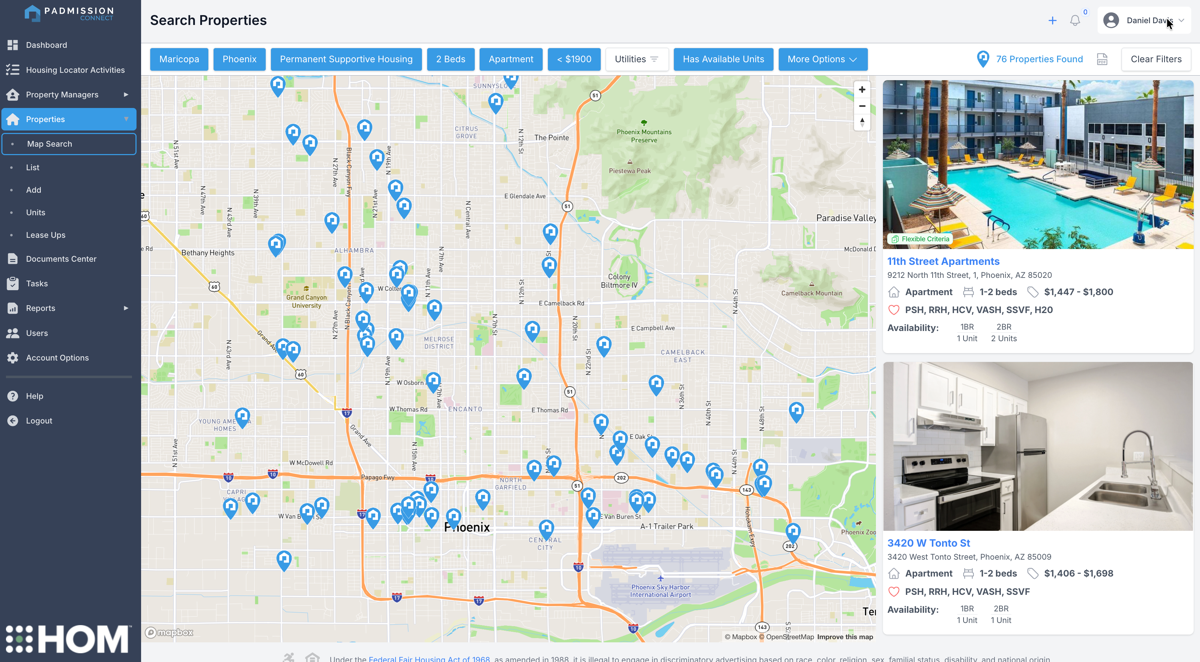
Connect's Map Search Functionality
An interactive map search with filtering specifically designed for homeless rental assistance programs enables Partnership Home's service provider partners to move households into permanent housing quickly.
Lessons in Building Landlord Trust
Partnership Home’s success has come from more than just technology—it’s also about people.
“The most important lesson I’ve learned in landlord engagement is that it’s crucial to stay front facing with landlords to build a strong foundation of trust. This helps prevent eviction for clients and ensures landlords know they can come to us in times of need.”
By using Padmission Connect alongside personal landlord relationships, Partnership Home has built a reliable system for both property owners and participants.
Bringing it Home
One client story stands out.
“We had a client who was completely new to the area and wasn’t sure where to start. Through the map feature, she found a place close to her future employer. She called, scheduled a tour right in front of me, and ultimately signed a lease there.”
Stories like this showcase how Padmission Connect not only supports case managers and landlords, but also empowers clients to make housing choices that fit their lives.
Advice for Other Communities
When asked what advice they’d share with others considering Padmission Connect, Partnership Home emphasized landlord excitement and data insights:
“Get your landlord partners excited about using Padmission. Those who update consistently and post specials see increased interest from clients and case managers alike. Also, keep an eye on the data—it shows which agencies are highly engaged and which might need more support.”
Explore centralized models in other communities by exploring other Unlocked posts.
Unlocking Housing Opportunities Together
Partnership Home’s story shows how a centralized housing search and landlord engagement platform can transform the way a community operates. By breaking down silos, strengthening trust with landlords, and making housing searches less stressful for participants, Padmission Connect helps accelerate the journey to stable housing.
This approach works because it reflects how homelessness response systems actually operate: distributed responsibility, shared accountability, and constant coordination. By separating relationship ownership from access visibility, communities can scale landlord engagement without concentrating power or creating bottlenecks.
Learn more about system-level approaches to landlord engagement, or talk with us about how Connect supports shared housing access across agencies.
Want to see how Padmission Connect can support your community’s housing efforts? Learn more about Padmission Connect here.
About the Author:
Daniel Davis
Related Posts
Unlocked: How Partnership Home Uses Padmission Connect to Strengthen Landlord Engagement
At Padmission, we know that every step toward ending homelessness matters. Across the country, our partners are unlocking new opportunities for landlords, providers, and participants to connect, collaborate, and create stable housing solutions.
That’s why we launched Unlocked—a blog series highlighting how communities are putting Padmission tools into action. Each feature celebrates lessons learned, partnerships strengthened, and doors opened for people seeking housing.
Our first Unlocked story takes us to Texas, where Partnership Home has transformed landlord engagement with Padmission Connect.
Prior to centralization, landlord engagement in Tarrant County operated through informal networks and agency-specific relationships. Housing navigators often relied on personal knowledge of available units, creating uneven access across programs and populations.
Partnership Home sought to create shared visibility into rental opportunities without removing agency autonomy or changing how housing decisions were made.
Spotlight on Partnership Home
Partnership Home serves as the collaborative applicant, HMIS, and Coordinated Entry lead for the TX-601 Continuum of Care. Their mission: build strong partnerships, lead with innovation, and act as a catalyst for community transformation.
We spoke with their Director of Housing and landlord engagement expert, Kimberly Doty, about how Padmission Connect has changed the way their team collaborates, engages landlords, and helps clients find a place to call home.
Centralizing Landlord Engagement
With centralized property engagement in place, landlords were no longer tied to a single program or navigator. At the same time, staff retained discretion over placements, eligibility, and participant support—decisions remained human-led, while access to information became system-owned.
Before using Padmission Connect, landlord engagement and housing navigation at Partnership Home was siloed. Staff often held onto “secret landlords” they had developed relationships with, which limited collaboration.
That’s changed dramatically.
“After about 6 months of showing up for our Case Management staff and showing them how we can ADD value to their already formed landlord relationships, our frontline staff now even bring us landlords they have found for the entire community to access.”
By shifting to a centralized property engagement model, Partnership Home has created a culture where landlord relationships are shared, not siloed. This ensures more equitable access to housing opportunities for all participants.
The team uses Padmission Connect daily to keep track of properties, landlord communication, and available units.
“Padmission has given our team a way to centralize our knowledge. We can pick up where someone else has left off in connecting with a property. Padmission’s different features help us ensure we are engaging with all our partners and have easy access to our unit inventory.”
Their most frequently used features for coordinated housing search include:
-
- Map-Based Search – to help clients quickly identify properties near work, school, or other important locations.
- Unit Reservations – to hold units for participants with substantial housing barriers.
- Lease-Up Tracking – to connect high-impact programs to successful placements.
Connect's Map Search Functionality
An interactive map search with filtering specifically designed for homeless rental assistance programs enables Partnership Home's service provider partners to move households into permanent housing quickly.
Lessons in Building Landlord Trust
Partnership Home’s success has come from more than just technology—it’s also about people.
“The most important lesson I’ve learned in landlord engagement is that it’s crucial to stay front facing with landlords to build a strong foundation of trust. This helps prevent eviction for clients and ensures landlords know they can come to us in times of need.”
By using Padmission Connect alongside personal landlord relationships, Partnership Home has built a reliable system for both property owners and participants.
Bringing it Home
One client story stands out.
“We had a client who was completely new to the area and wasn’t sure where to start. Through the map feature, she found a place close to her future employer. She called, scheduled a tour right in front of me, and ultimately signed a lease there.”
Stories like this showcase how Padmission Connect not only supports case managers and landlords, but also empowers clients to make housing choices that fit their lives.
Advice for Other Communities
When asked what advice they’d share with others considering Padmission Connect, Partnership Home emphasized landlord excitement and data insights:
“Get your landlord partners excited about using Padmission. Those who update consistently and post specials see increased interest from clients and case managers alike. Also, keep an eye on the data—it shows which agencies are highly engaged and which might need more support.”
Explore centralized models in other communities by exploring other Unlocked posts.
Unlocking Housing Opportunities Together
Partnership Home’s story shows how a centralized housing search and landlord engagement platform can transform the way a community operates. By breaking down silos, strengthening trust with landlords, and making housing searches less stressful for participants, Padmission Connect helps accelerate the journey to stable housing.
This approach works because it reflects how homelessness response systems actually operate: distributed responsibility, shared accountability, and constant coordination. By separating relationship ownership from access visibility, communities can scale landlord engagement without concentrating power or creating bottlenecks.
Learn more about system-level approaches to landlord engagement, or talk with us about how Connect supports shared housing access across agencies.
Want to see how Padmission Connect can support your community’s housing efforts? Learn more about Padmission Connect here.
About the Author:
Daniel Davis