Introducing Journey’s Property Owner & Manager Portal — Here’s What It Enables for Your Program
TL;DR
- Staff inquiry burden — When property owners can’t see their own payment status, they call your staff. Journey’s new Property Owner & Manager Portal redirects that contact to self-service — without compromising household privacy.
- Faster hold resolution — Owners can see exactly what document is missing and upload it directly. The communication loop shortens from days to hours.
- Compliance trail by design — Every portal action is logged and reviewable: document submissions, payment holds, contact changes. Audit trail created through normal workflow execution — not retroactive reconstruction.
- Privacy is structural — Household data (SSNs, income, family composition, case notes) is never accessible in the portal, regardless of the owner’s role. These are architectural constraints, not configurable permissions.
- Built for this context — This was designed for housing assistance programs specifically, not adapted from general property management software. The feature set and limitations reflect HUD and other funder compliance requirements.
Property owners without payment visibility call your staff. The Journey Property Owner & Manager Portal changes where that inquiry goes first.
Most programs administering rental assistance have no formal mechanism for property owners to check payment status, understand why a hold was placed on a payment, or submit a required document without emailing or calling a staff member and waiting. The result is predictable: staff fielding routine status inquiries week after week, payment holds resolution delayed by back-and-forth communication, and landlord relationships strained by opacity the program never intended.
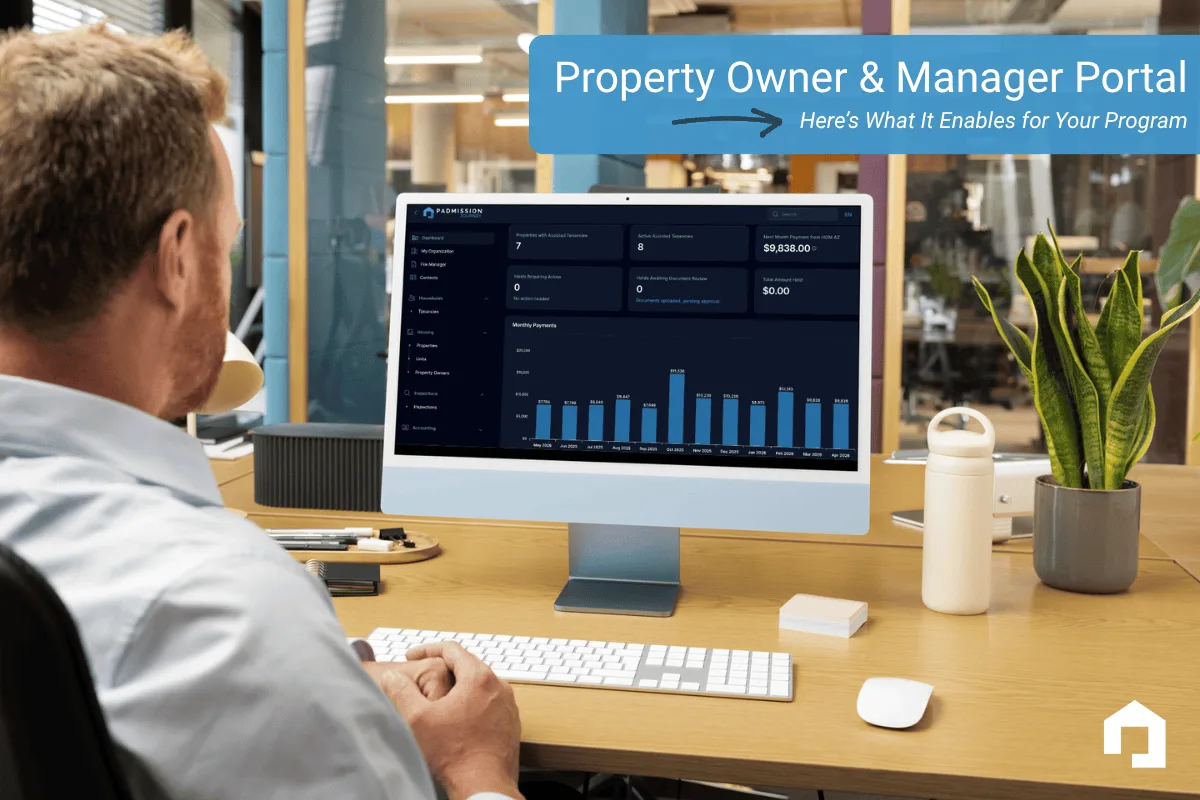
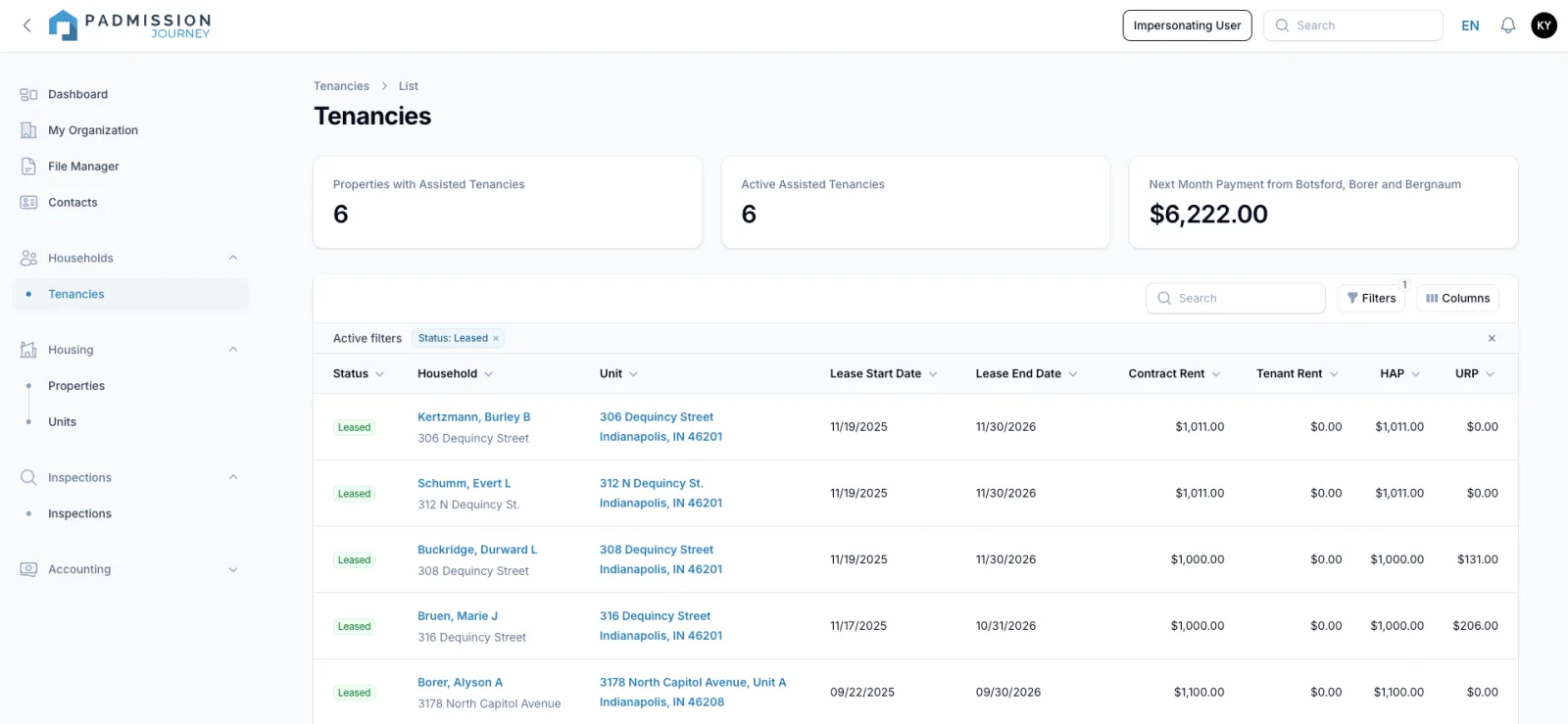
The Journey Property Owner & Manager Portal addresses this directly. Property owners and managers get secure, self-service access to the information they need — payment history, hold status, required documents, inspection results, and limited tenancy information — without routing every question through your team.
The Inquiry Burden Is a System Design Problem, Not a Staffing Problem
Housing program teams spend significant time answering questions property owners could answer themselves, if they had a place to look. This isn’t a failure of communication. It’s the predictable result of a system that has never given owners anywhere to go except a staff inbox.
The problem compounds when a payment hold is placed. Without visibility into what triggered the hold or what document is needed to resolve it, owners call and email until someone responds. Staff identify the issue, communicate the requirement, and wait for the document to arrive. Days and weeks can pass between hold placement and resolution — not because the solution is complex, but because the information isn’t structured for direct access.
What the Portal Gives Owners — and What It Protects
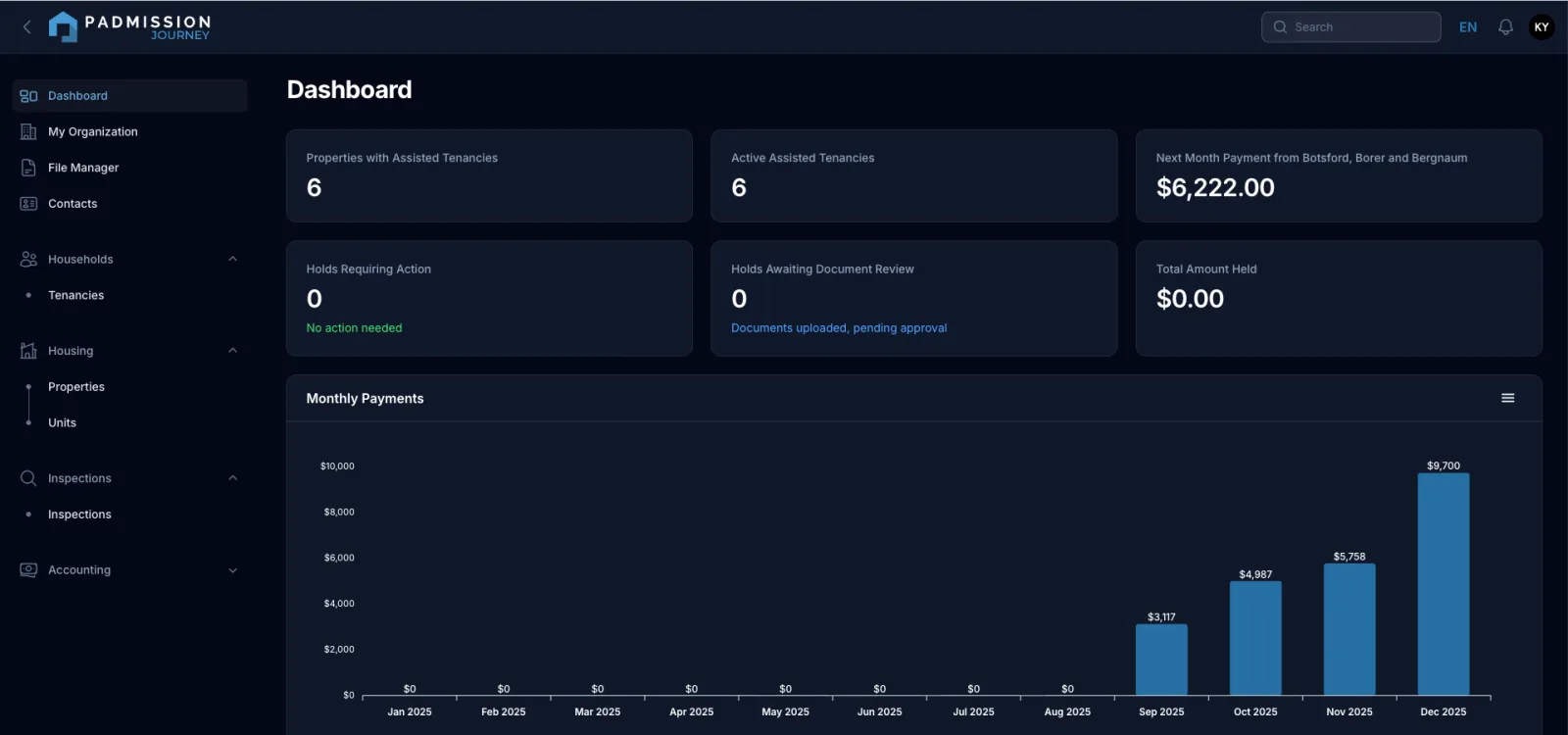
The portal is deliberately scoped. It provides operational visibility without exposing household personal data, and it allows document submission without giving owners the ability to modify program records.
Payment Transparency
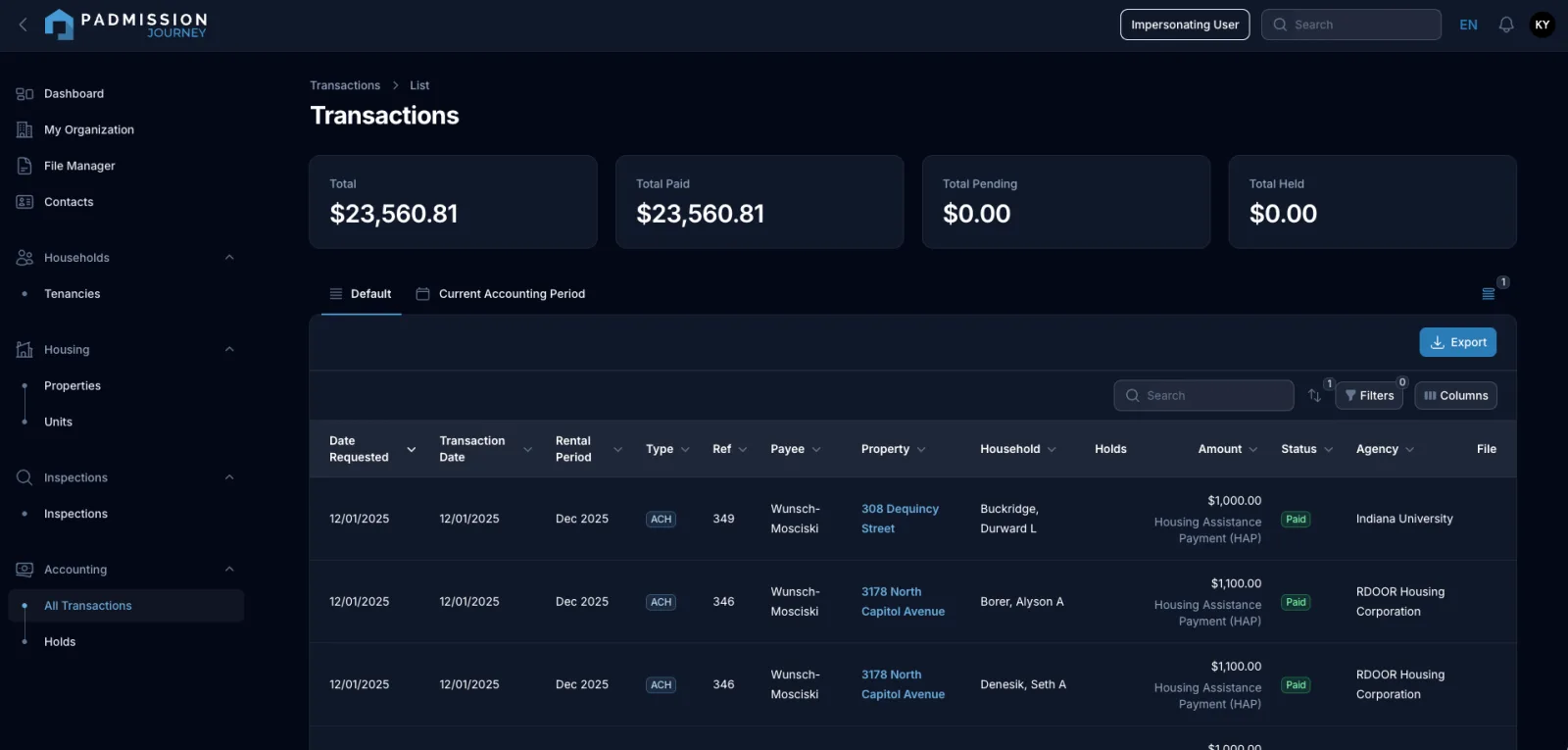
Owners can view payment history, download transaction details, see which payments are on hold, understand why a hold was placed, and upload the documents needed to resolve it. This directly addresses the most frequent source of inbound staff inquiries and creates a self-directed path from hold placement to resolution.
Document Management
Required documents — W-9s, leases, insurance certificates, payment account information — can be uploaded directly into the system. Owners track document status: pending, approved, or rejected. Agency review is required before any document takes effect. Owners cannot approve, delete, or modify submitted documents.
Tenancy Information, Within Privacy Limits
The portal shows limited tenancy data: unit and program enrollment, document status, and high-level assistance details. It does not show SSNs, income, family composition, or case notes. These protections are structural — the data is not accessible to portal users regardless of role or access level.
Inspection Results
Owners can view upcoming inspection dates, results, photos, and reports. Failed items and required follow-ups are visible in read-only format. Owners cannot schedule, modify, or annotate inspections. For communities operating under NSPIRE, this provides a documented, accessible record of inspections administration without staff intermediation.
Organization-Level Access Management
Property management companies can add or remove staff, assign properties to specific team members, and manage Administrator versus Member permissions without requiring agency involvement. Administrators have full access across the organization’s properties; Members are restricted to assigned properties only.
What Changes for Your Staff
Staff currently spending time on routine status inquiries redirect that time to housing program administration and customer service. Hold resolution time decreases when owners can act directly — they see the requirement, upload the document, and staff review rather than chase.
Every action taken in the portal is logged. Document submissions, status changes, and hold events are recorded and reviewable. When a monitoring visit arrives, the trail is there — not reconstructed from email threads.
For CoC leadership focused on landlord engagement and retention at the system level, the portal operationalizes something that is difficult to create through communication alone: a program experience that treats property owners as meaningful partners rather than passive recipients of payment and sporadic outreach. Property owners who can see their payment status and resolve holds without waiting on a staff response are less likely to disengage from the program.
The Compliance Logic Is Architectural
Household privacy protections in the portal are not dependent on staff vigilance or configuration choices. The data that cannot be shared with owners — personal identifiers, income details, case notes, family composition — is not accessible in the portal environment, regardless of the owner’s role.
The boundaries of what owners can and cannot do are also fixed by design. Owners cannot modify tenancy records, approve their own documents, remove payment holds, or access properties they do not own or manage. These are architectural constraints, not configurable permissions.
This matters for communities where housing program administration operates under HUD compliance requirements that govern data sharing, participant privacy, and documentation integrity. The portal was designed with those requirements as a starting condition, not adapted from software built for different purposes.
| In Practice: What Changes When the POM Portal Is Active
● Routine landlord inquiries about payment status and holds route to the portal rather than staff ● Hold resolution accelerates: owners upload required documents directly; staff review rather than coordinate ● Document compliance is tracked in a central record — status visible to both agency and owner ● Inspection results are accessible to owners without staff intermediation ● All portal actions are logged, supporting a reviewable compliance trail without retroactive reconstruction ● Access management stays current as property management organizations add or rotate staff |
Practitioner POV: What This Looks Like in Daily Operations
For a housing program director, the portal changes where landlord questions land. Instead of arriving as calls and emails that interrupt staff workflow, routine status inquiries resolve through self-service. Staff attention shifts toward the decisions and exceptions that require it.
For the staff member handling compliance and documentation, the portal creates a cleaner record. Every document submission, status change, and hold event is tracked. When a monitoring visit arrives, the trail is organized and time-stamped — not dependent on how well someone maintained their inbox.
For a CoC executive, the portal reflects something important about how the program is positioned in its landlord market. Communities that deliver a professional, responsive experience to property owners — one where owners don’t have to wait for a staff email to know where their payment stands — are more attractive partners and more competitive when landlords are deciding which programs to work with.
Ready to Strengthen Landlord Partnerships in Your Community?
Journey was built to help communities administer rental assistance programs consistently, compliantly, and at a scale that doesn’t depend on heroic individual effort. The Property Owner & Manager Portal is part of that system — designed to give owners visibility while keeping program administration firmly in agency hands.
Schedule a walkthrough of Journey →
Explore how Journey structures rental assistance program execution: centralized rental assistance administration →
About the Author:
Daniel Davis
Introducing Journey’s Property Owner & Manager Portal — Here’s What It Enables for Your Program
TL;DR
- Staff inquiry burden — When property owners can’t see their own payment status, they call your staff. Journey’s new Property Owner & Manager Portal redirects that contact to self-service — without compromising household privacy.
- Faster hold resolution — Owners can see exactly what document is missing and upload it directly. The communication loop shortens from days to hours.
- Compliance trail by design — Every portal action is logged and reviewable: document submissions, payment holds, contact changes. Audit trail created through normal workflow execution — not retroactive reconstruction.
- Privacy is structural — Household data (SSNs, income, family composition, case notes) is never accessible in the portal, regardless of the owner’s role. These are architectural constraints, not configurable permissions.
- Built for this context — This was designed for housing assistance programs specifically, not adapted from general property management software. The feature set and limitations reflect HUD and other funder compliance requirements.
Property owners without payment visibility call your staff. The Journey Property Owner & Manager Portal changes where that inquiry goes first.
Most programs administering rental assistance have no formal mechanism for property owners to check payment status, understand why a hold was placed on a payment, or submit a required document without emailing or calling a staff member and waiting. The result is predictable: staff fielding routine status inquiries week after week, payment holds resolution delayed by back-and-forth communication, and landlord relationships strained by opacity the program never intended.
The Journey Property Owner & Manager Portal addresses this directly. Property owners and managers get secure, self-service access to the information they need — payment history, hold status, required documents, inspection results, and limited tenancy information — without routing every question through your team.
The Inquiry Burden Is a System Design Problem, Not a Staffing Problem
Housing program teams spend significant time answering questions property owners could answer themselves, if they had a place to look. This isn’t a failure of communication. It’s the predictable result of a system that has never given owners anywhere to go except a staff inbox.
The problem compounds when a payment hold is placed. Without visibility into what triggered the hold or what document is needed to resolve it, owners call and email until someone responds. Staff identify the issue, communicate the requirement, and wait for the document to arrive. Days and weeks can pass between hold placement and resolution — not because the solution is complex, but because the information isn’t structured for direct access.

What the Portal Gives Owners — and What It Protects
The portal is deliberately scoped. It provides operational visibility without exposing household personal data, and it allows document submission without giving owners the ability to modify program records.
Payment Transparency
Owners can view payment history, download transaction details, see which payments are on hold, understand why a hold was placed, and upload the documents needed to resolve it. This directly addresses the most frequent source of inbound staff inquiries and creates a self-directed path from hold placement to resolution.
Document Management
Required documents — W-9s, leases, insurance certificates, payment account information — can be uploaded directly into the system. Owners track document status: pending, approved, or rejected. Agency review is required before any document takes effect. Owners cannot approve, delete, or modify submitted documents.
Tenancy Information, Within Privacy Limits
The portal shows limited tenancy data: unit and program enrollment, document status, and high-level assistance details. It does not show SSNs, income, family composition, or case notes. These protections are structural — the data is not accessible to portal users regardless of role or access level.
Inspection Results
Owners can view upcoming inspection dates, results, photos, and reports. Failed items and required follow-ups are visible in read-only format. Owners cannot schedule, modify, or annotate inspections. For communities operating under NSPIRE, this provides a documented, accessible record of inspections administration without staff intermediation.
Organization-Level Access Management
Property management companies can add or remove staff, assign properties to specific team members, and manage Administrator versus Member permissions without requiring agency involvement. Administrators have full access across the organization’s properties; Members are restricted to assigned properties only.

What Changes for Your Staff
Staff currently spending time on routine status inquiries redirect that time to housing program administration and customer service. Hold resolution time decreases when owners can act directly — they see the requirement, upload the document, and staff review rather than chase.
Every action taken in the portal is logged. Document submissions, status changes, and hold events are recorded and reviewable. When a monitoring visit arrives, the trail is there — not reconstructed from email threads.
For CoC leadership focused on landlord engagement and retention at the system level, the portal operationalizes something that is difficult to create through communication alone: a program experience that treats property owners as meaningful partners rather than passive recipients of payment and sporadic outreach. Property owners who can see their payment status and resolve holds without waiting on a staff response are less likely to disengage from the program.
The Compliance Logic Is Architectural
Household privacy protections in the portal are not dependent on staff vigilance or configuration choices. The data that cannot be shared with owners — personal identifiers, income details, case notes, family composition — is not accessible in the portal environment, regardless of the owner’s role.
The boundaries of what owners can and cannot do are also fixed by design. Owners cannot modify tenancy records, approve their own documents, remove payment holds, or access properties they do not own or manage. These are architectural constraints, not configurable permissions.
This matters for communities where housing program administration operates under HUD compliance requirements that govern data sharing, participant privacy, and documentation integrity. The portal was designed with those requirements as a starting condition, not adapted from software built for different purposes.
| In Practice: What Changes When the POM Portal Is Active
● Routine landlord inquiries about payment status and holds route to the portal rather than staff ● Hold resolution accelerates: owners upload required documents directly; staff review rather than coordinate ● Document compliance is tracked in a central record — status visible to both agency and owner ● Inspection results are accessible to owners without staff intermediation ● All portal actions are logged, supporting a reviewable compliance trail without retroactive reconstruction ● Access management stays current as property management organizations add or rotate staff |

Practitioner POV: What This Looks Like in Daily Operations
For a housing program director, the portal changes where landlord questions land. Instead of arriving as calls and emails that interrupt staff workflow, routine status inquiries resolve through self-service. Staff attention shifts toward the decisions and exceptions that require it.
For the staff member handling compliance and documentation, the portal creates a cleaner record. Every document submission, status change, and hold event is tracked. When a monitoring visit arrives, the trail is organized and time-stamped — not dependent on how well someone maintained their inbox.
For a CoC executive, the portal reflects something important about how the program is positioned in its landlord market. Communities that deliver a professional, responsive experience to property owners — one where owners don’t have to wait for a staff email to know where their payment stands — are more attractive partners and more competitive when landlords are deciding which programs to work with.
Ready to Strengthen Landlord Partnerships in Your Community?
Journey was built to help communities administer rental assistance programs consistently, compliantly, and at a scale that doesn’t depend on heroic individual effort. The Property Owner & Manager Portal is part of that system — designed to give owners visibility while keeping program administration firmly in agency hands.
Schedule a walkthrough of Journey →
Explore how Journey structures rental assistance program execution: centralized rental assistance administration →
About the Author:
Daniel Davis