
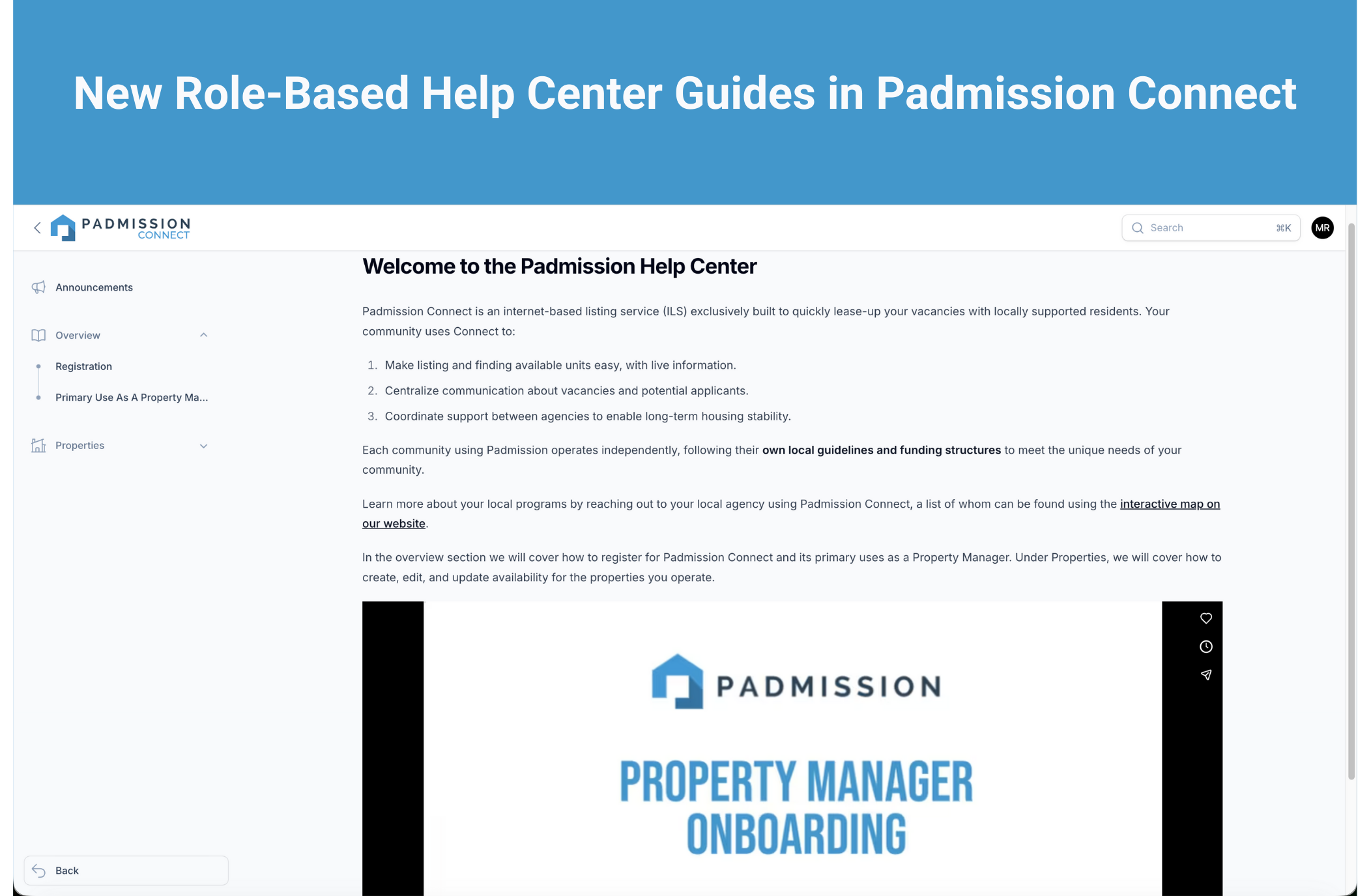
Building Shared Understanding in Housing Search: New Help Center Guides in Padmission Connect

Housing search and landlord engagement workflows rely on shared understanding across roles. When guidance lives in disconnected documents, inboxes, or institutional memory, systems become vulnerable to staff turnover and inconsistent practice.
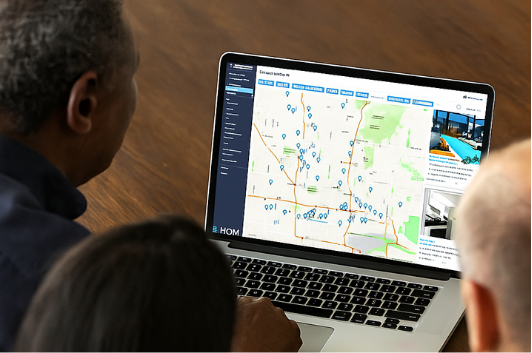
Padmission Connect includes built-in Help Center Guides that sit alongside landlord engagement and housing search workflows, providing role-specific guidance without removing local ownership over process or policy.
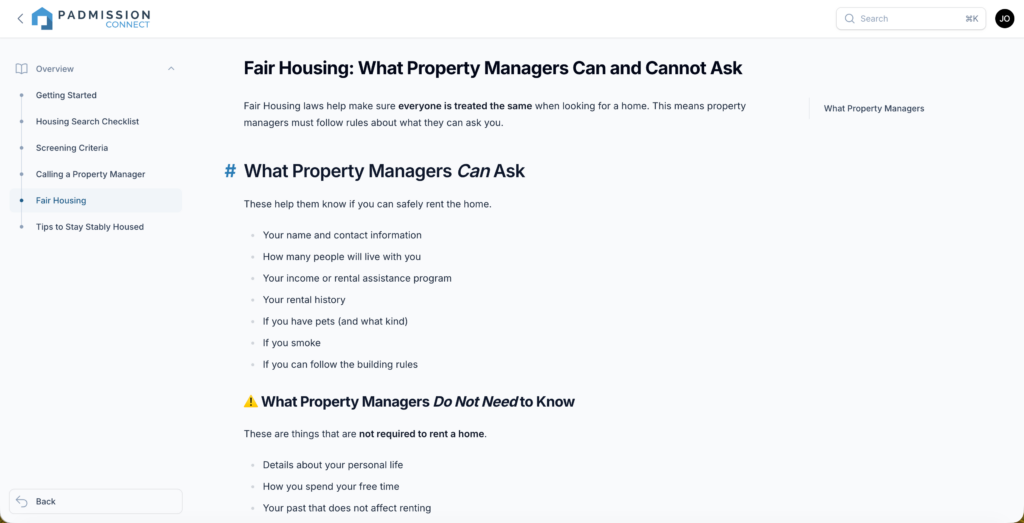
The new participant help guide encourages easy Connect use to enable faster housing search and empowers program participants to search confidently.
When Guidance Is Fragmented, Systems Slow Down
Housing search is inherently multi-party work. Participants, case managers, and property managers all engage with the same process—but from very different perspectives, with different responsibilities and constraints.
When guidance is unclear or inconsistent, the burden shows up quickly. Participants may not know what information to share or how to prepare for outreach. Case managers spend time re-explaining basic steps or correcting misunderstandings. Property managers disengage when expectations feel opaque or misaligned.
Over time, these small points of friction compound into delays, repeated follow-up, and avoidable Fair Housing risk.
Why Shared Infrastructure Needs Shared Understanding
Most communities invest in platforms to coordinate housing search. But technology alone doesn’t create alignment. Systems work best when everyone involved has access to guidance that reflects:
-
Their role in the process
-
Their responsibilities and boundaries
-
How their actions connect to others
Without role-specific support, staff end up acting as translators—bridging gaps that should be handled by shared infrastructure.
A Role-Centered Approach to New Help Guides
For Participants
Participant guides use trauma-informed, strengths-based language and are designed to be easy to understand and apply. They help participants understand how to engage in housing search without needing to interpret complex system rules on their own.
Resources include:
-
A step-by-step participant guide for Connect use
-
A housing search checklist
-
A simple call script for contacting property managers
-
Plain-language explanations of Fair Housing and screening
-
Tips for staying housed and understanding leases
For Case Managers
Case manager resources focus on consistency and coordination. They cover:
-
Supporting housing search using shared tools
-
Working with participants inside the platform
-
Communicating with property managers
-
Applying Fair Housing boundaries
-
Documentation and coordination best practices
These guides are designed to support shared standards across teams while respecting local policy and program design.
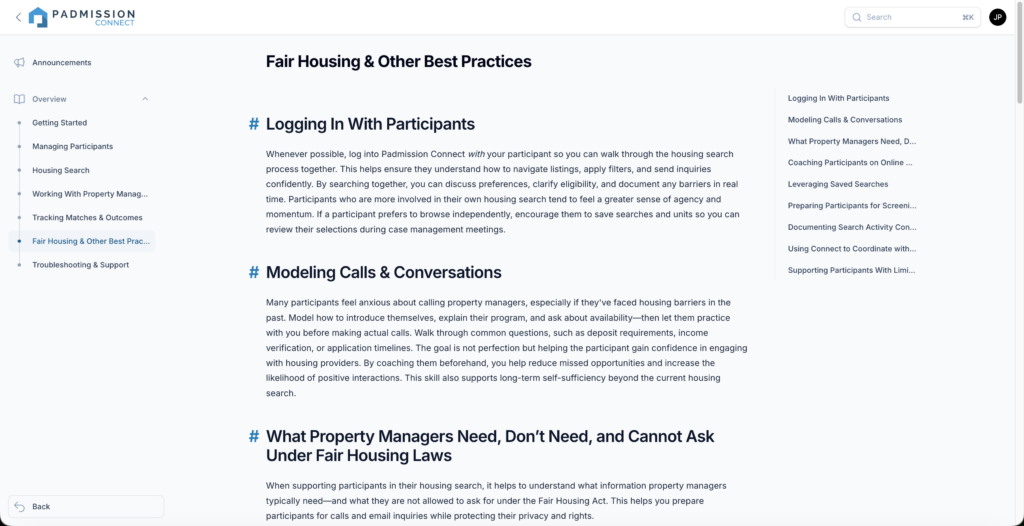
Guides written by direct-care experienced-staff, for direct care staff, to center best practices in housing search, client choice, and fair housing.
For Property Managers
Updated property manager guides provide:
-
Clear onboarding instructions
-
Step-by-step help for adding and managing properties
-
Guidance on working with housing programs and referrals
-
Simple explanations of how Connect supports lease-ups
The intent is to reduce confusion and make participation more straightforward without requiring deep system knowledge.
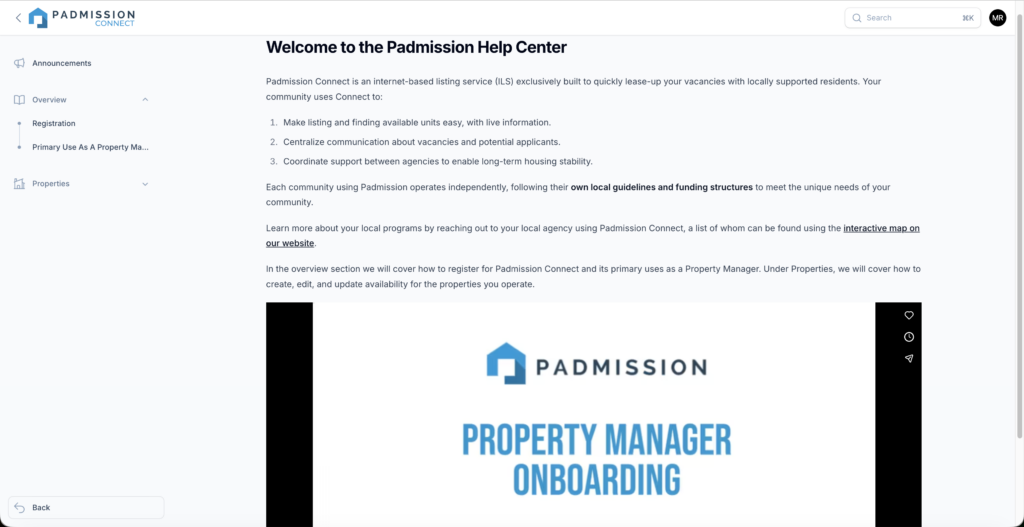
New help documents geared to property managers helps ensure property partners understand the value of keeping their property availability updated, making the data in Connect more usable and reliable.
When guidance is embedded where work happens, staff don’t need to pause to interpret separate manuals or rely on informal training. This structure supports continuity across agencies and roles, ensuring that expectations remain clear even as personnel change.
How This Supports Day-to-Day Work
Systems function best when knowledge persists beyond individuals. By keeping guidance connected to workflow, communities reduce ambiguity while amplifying human decision-making.
Explore how coordinated housing search workflows are supported in Connect, or talk with our team about documentation strategies that strengthen long-term system operations.
About the Author:
Daniel Davis
Related Posts
Building Shared Understanding in Housing Search: New Help Center Guides in Padmission Connect
Housing search and landlord engagement workflows rely on shared understanding across roles. When guidance lives in disconnected documents, inboxes, or institutional memory, systems become vulnerable to staff turnover and inconsistent practice.
Padmission Connect includes built-in Help Center Guides that sit alongside landlord engagement and housing search workflows, providing role-specific guidance without removing local ownership over process or policy.
The new participant help guide encourages easy Connect use to enable faster housing search and empowers program participants to search confidently.
When Guidance Is Fragmented, Systems Slow Down
Housing search is inherently multi-party work. Participants, case managers, and property managers all engage with the same process—but from very different perspectives, with different responsibilities and constraints.
When guidance is unclear or inconsistent, the burden shows up quickly. Participants may not know what information to share or how to prepare for outreach. Case managers spend time re-explaining basic steps or correcting misunderstandings. Property managers disengage when expectations feel opaque or misaligned.
Over time, these small points of friction compound into delays, repeated follow-up, and avoidable Fair Housing risk.
Why Shared Infrastructure Needs Shared Understanding
Most communities invest in platforms to coordinate housing search. But technology alone doesn’t create alignment. Systems work best when everyone involved has access to guidance that reflects:
-
Their role in the process
-
Their responsibilities and boundaries
-
How their actions connect to others
Without role-specific support, staff end up acting as translators—bridging gaps that should be handled by shared infrastructure.
A Role-Centered Approach to New Help Guides
For Participants
Participant guides use trauma-informed, strengths-based language and are designed to be easy to understand and apply. They help participants understand how to engage in housing search without needing to interpret complex system rules on their own.
Resources include:
-
A step-by-step participant guide for Connect use
-
A housing search checklist
-
A simple call script for contacting property managers
-
Plain-language explanations of Fair Housing and screening
-
Tips for staying housed and understanding leases
For Case Managers
Case manager resources focus on consistency and coordination. They cover:
-
Supporting housing search using shared tools
-
Working with participants inside the platform
-
Communicating with property managers
-
Applying Fair Housing boundaries
-
Documentation and coordination best practices
These guides are designed to support shared standards across teams while respecting local policy and program design.
Guides written by direct-care experienced-staff, for direct care staff, to center best practices in housing search, client choice, and fair housing.
For Property Managers
Updated property manager guides provide:
-
Clear onboarding instructions
-
Step-by-step help for adding and managing properties
-
Guidance on working with housing programs and referrals
-
Simple explanations of how Connect supports lease-ups
The intent is to reduce confusion and make participation more straightforward without requiring deep system knowledge.
New help documents geared to property managers helps ensure property partners understand the value of keeping their property availability updated, making the data in Connect more usable and reliable.
When guidance is embedded where work happens, staff don’t need to pause to interpret separate manuals or rely on informal training. This structure supports continuity across agencies and roles, ensuring that expectations remain clear even as personnel change.
How This Supports Day-to-Day Work
Systems function best when knowledge persists beyond individuals. By keeping guidance connected to workflow, communities reduce ambiguity while amplifying human decision-making.
Explore how coordinated housing search workflows are supported in Connect, or talk with our team about documentation strategies that strengthen long-term system operations.
About the Author:
Daniel Davis