

Why Administering Housing Programs Has Become So Difficult — and What Needs to Change

Author’s Note: This article is written from my personal perspective as someone who has spent more than three decades administering housing programs and building systems to support them. My views expressed here reflect my experience and my conviction that the infrastructure supporting housing assistance programs must evolve.
This is not a product announcement. It is an invitation to examine how we organize and sustain this work.
Permanent housing assistance programs—Rapid Rehousing, Permanent Supportive Housing, and other rental and leasing assistance models—are the most effective tools communities have to end homelessness.
When they work, people stabilize. Landlords stay engaged. Public dollars translate into real outcomes.
I’ve spent over three decades inside these programs—building them, administering them, scaling them, fixing them when they break. I’ve watched communities make extraordinary progress when the operational foundation is strong.
I’ve also watched that foundation quietly erode. What failed wasn’t commitment or expertise—it was the absence of systems and tools designed to carry increasing complexity.
Today, administering housing assistance has become one of the most complex, fragile, and high-risk functions in the homeless response system. Not because people aren’t committed or capable—but because the infrastructure supporting it never caught up with what the work became.
This is not a story about failure. It’s a story about growth without support and purpose-built tools that solve day-to-day challenges.
This article examines why administering housing programs has become so difficult, why these challenges persist, and why meaningful change requires purpose-built systems, like Journey — not more heroic effort.
The Work Got Bigger. The Systems Did Not.
Housing programs didn’t become complex overnight. They grew gradually:
- More households served
- More property owner and management company partners
- More models for rental and leasing assistance
- More funding sources braided together
- More compliance requirements layered on top
- More accountability expected, often retroactively
But the tools used to administer these programs largely stayed the same.
And it’s the story that ultimately led us to build Journey.
In most communities, housing program administration still happens across a patchwork of apps and tools that were never designed to work together:
- Spreadsheets tracking households, units, landlords, inspections, payments—and often spreadsheets tracking the spreadsheets
- Separate worksheets for rent calculations and subsidy determinations
- Shared drives full of PDFs and naming conventions only a few staff truly understand
- Paper files passed from desk to desk
- Email inboxes functioning as workflow engines for Requests for Tenancy Approval
- HMIS reports and case management systems that stop at the edges of housing operations
- Accounting systems disconnected from household-level context
There is rarely a true system of record for a household or tenancy. Instead, information is scattered—each system holding a partial truth.
So people become the system. Staff enter and re-enter data. They reconcile discrepancies. They reconstruct timelines during audits.
And when something goes wrong, the solution often depends on finding the one person who “knows how this works.”
We need to stop demanding more from our people and accepting limitations from our tools and systems. We should have tools and systems that actually support our people.
The Hidden Human Cost of Fragmentation
Administering housing programs is deeply technical work. Staff must correctly apply:
- Program-specific eligibility criteria
- Rent and subsidy calculations
- Income, asset, and expense rules
- Inspection standards
- Rent reasonableness determinations
- Documentation requirements tied to multiple funders
This is not clerical work. It requires training, judgment, and experience. Yet the workforce carrying this responsibility operates under chronic constraints:
- Understaffing
- Limited funding for competitive wages
- High turnover driven by burnout
- Increased scrutiny as homelessness becomes more visible
Housing navigators and case managers—people who entered this field to help others exit homelessness—are routinely asked to function as compliance specialists, accountants, policy interpreters, and auditors.
These activities require specialized knowledge and expertise. Asking case managers to determine rent reasonableness is like asking an accountant to perform street outreach using motivational interviewing techniques.
When institutional knowledge lives in people instead of systems, turnover doesn’t just slow programs down—it erases memory. Each departure takes logic, context, and hard-won understanding with it.
When staff get to burnout levels, the impact is not just on the individual team member, but the entire system.
Policy Volatility Without Guardrails
Housing programs operate in a constantly shifting policy environment.
Federal rules change. Guidance arrives late—or not at all. Implementation timelines move. HOTMA and NSPIRE are only the most recent reminders that operational change often precedes clarity.
Public Housing Authorities (PHAs) operate the Housing Choice Voucher program within a structured ecosystem that provides:
- Regular HUD notices and guidance
- HUD prescribed forms and templates
- Standardized implementation frameworks and tools
- Professional development and training partners
HUD CoC Program-funded providers do not have the same level of support. Instead, interpretation happens at the agency—or even staff—level:
- Which rules apply to which funding source?
- How should new guidance be applied to existing households?
- What documentation is now required? Retroactively?
Over time, this produces inconsistency, overdocumentation driven by fear, and unnecessary compliance risk. Interpretation risk is the failure mode for housing program teams. Different staff interpret the same rule differently, changes get applied inconsistently across households and programs, and compliance becomes defensive rather than operational.
Without guardrails, compliance becomes something people worry about after the fact instead of something systems support by design.
Data Exists, but Visibility is Limited
Most housing programs have data. What they lack is operational visibility.
Leadership is routinely asked questions like:
- How many households are actively assisted right now?
- How many are searching for housing?
- How long does lease-up take in each program?
- What are the housing program’s lease-up success rates?
- What are the average per household subsidy amounts?
- How much funding has been spent—and how much remains?
Answering these questions often requires days of reconciliation across multiple systems and departments with the agency. The result is reactive management instead of informed leadership. The desire to be data-driven is widespread. The infrastructure to support it is not.
Complexity Isn’t New — Unsupported Complexity Is
Housing assistance has never been simple.
What is new is the scale, the layering of funding, and the expectations placed on programs—without corresponding investment in operational tools and systems.
For decades, providers succeeded despite the tools they used, not because of them. That success came at a real cost to staff, households, landlords, and communities. Eventually, effort alone stops being enough.
Why Journey Exists
 We built Padmission Journey because we reached a point where we could no longer accept that this is “just how it works,” or “we have to make these tools work for our housing programs.”
Journey is my love letter to the field—but it’s written in workflows, guardrails, and systems, not sentiment. It is built around a simple principle:
Encode complexity into the system—not into people.
Housing assistance will always involve nuance. Journey doesn’t eliminate complexity; it supports it. Instead of asking staff to remember, calculate, interpret, and reconcile, Journey provides structured workflows that reflect how housing programs actually operate—end to end.
The goal is not speed at the expense of accuracy. It is sustainability without fragility.
From Failure Points to Guardrails
Journey replaces common failure modes with intentional design:
- Referrals and eligibility decisions are centralized, consistent, and traceable
- RFTAs move through clear, visible approval paths instead of inboxes
- Tenancy Actions are tracked across the full tenancy lifecycle, not managed by memory
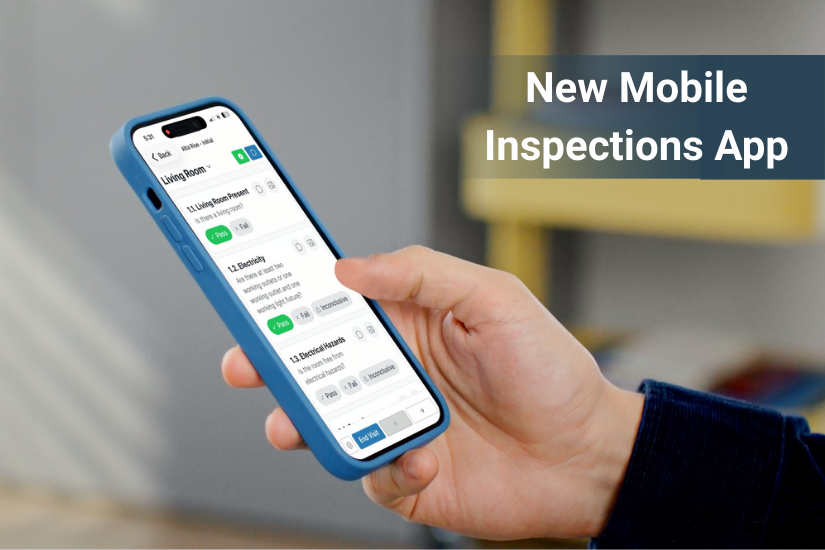
- Inspections are mobile, standardized, and connected to tenancy records
- Rent Reasonableness builds on retained comparables and custom scoring, not constant reinvention
- Rent Calculations are embedded, verifiable, and defensible
- Payments are tracked by household, tenancy, landlord, project, and funding source
Just as importantly, Journey supports the other half of the system: property owners and managers. Secure portals reduce friction, increase transparency, and reinforce partnership.
What This Unlocks
When complexity is supported rather than ignored, programs unlock real gains:
- Reduced burnout
- Lower error rates
- Faster lease-ups
- Higher housing success rates
- Institutional knowledge that survives turnover
- Consistent execution across agencies and programs
- Visibility and transparency of outcomes
- Confidence during review, monitoring, or public scrutiny
The work becomes sustainable.
Rental assistance will never be simple. But it does not have to be fragile. Journey represents a shift away from heroic individual effort and toward reliable systems built for the work as it actually exists today.
If administering housing assistance is this complex at the program level, the next question is unavoidable:
Why are we asking multiple agencies in a single community to solve it independently?
Next: Why Continuums of Care Should Centralize Rental Assistance Administration
About the Author:
Mike Shore
Related Posts

Why Administering Housing Programs Has Become So Difficult — and What Needs to Change
Author’s Note: This article is written from my personal perspective as someone who has spent more than three decades administering housing programs and building systems to support them. My views expressed here reflect my experience and my conviction that the infrastructure supporting housing assistance programs must evolve.
This is not a product announcement. It is an invitation to examine how we organize and sustain this work.
Permanent housing assistance programs—Rapid Rehousing, Permanent Supportive Housing, and other rental and leasing assistance models—are the most effective tools communities have to end homelessness.
When they work, people stabilize. Landlords stay engaged. Public dollars translate into real outcomes.
I’ve spent over three decades inside these programs—building them, administering them, scaling them, fixing them when they break. I’ve watched communities make extraordinary progress when the operational foundation is strong.
I’ve also watched that foundation quietly erode. What failed wasn’t commitment or expertise—it was the absence of systems and tools designed to carry increasing complexity.
Today, administering housing assistance has become one of the most complex, fragile, and high-risk functions in the homeless response system. Not because people aren’t committed or capable—but because the infrastructure supporting it never caught up with what the work became.
This is not a story about failure. It’s a story about growth without support and purpose-built tools that solve day-to-day challenges.
This article examines why administering housing programs has become so difficult, why these challenges persist, and why meaningful change requires purpose-built systems, like Journey — not more heroic effort.
The Work Got Bigger. The Systems Did Not.
Housing programs didn’t become complex overnight. They grew gradually:
- More households served
- More property owner and management company partners
- More models for rental and leasing assistance
- More funding sources braided together
- More compliance requirements layered on top
- More accountability expected, often retroactively
But the tools used to administer these programs largely stayed the same.
And it’s the story that ultimately led us to build Journey.
In most communities, housing program administration still happens across a patchwork of apps and tools that were never designed to work together:
- Spreadsheets tracking households, units, landlords, inspections, payments—and often spreadsheets tracking the spreadsheets
- Separate worksheets for rent calculations and subsidy determinations
- Shared drives full of PDFs and naming conventions only a few staff truly understand
- Paper files passed from desk to desk
- Email inboxes functioning as workflow engines for Requests for Tenancy Approval
- HMIS reports and case management systems that stop at the edges of housing operations
- Accounting systems disconnected from household-level context
There is rarely a true system of record for a household or tenancy. Instead, information is scattered—each system holding a partial truth.
So people become the system. Staff enter and re-enter data. They reconcile discrepancies. They reconstruct timelines during audits.
And when something goes wrong, the solution often depends on finding the one person who “knows how this works.”
We need to stop demanding more from our people and accepting limitations from our tools and systems. We should have tools and systems that actually support our people.
The Hidden Human Cost of Fragmentation
Administering housing programs is deeply technical work. Staff must correctly apply:
- Program-specific eligibility criteria
- Rent and subsidy calculations
- Income, asset, and expense rules
- Inspection standards
- Rent reasonableness determinations
- Documentation requirements tied to multiple funders
This is not clerical work. It requires training, judgment, and experience. Yet the workforce carrying this responsibility operates under chronic constraints:
- Understaffing
- Limited funding for competitive wages
- High turnover driven by burnout
- Increased scrutiny as homelessness becomes more visible
Housing navigators and case managers—people who entered this field to help others exit homelessness—are routinely asked to function as compliance specialists, accountants, policy interpreters, and auditors.
These activities require specialized knowledge and expertise. Asking case managers to determine rent reasonableness is like asking an accountant to perform street outreach using motivational interviewing techniques.
When institutional knowledge lives in people instead of systems, turnover doesn’t just slow programs down—it erases memory. Each departure takes logic, context, and hard-won understanding with it.
When staff get to burnout levels, the impact is not just on the individual team member, but the entire system.
Policy Volatility Without Guardrails
Housing programs operate in a constantly shifting policy environment.
Federal rules change. Guidance arrives late—or not at all. Implementation timelines move. HOTMA and NSPIRE are only the most recent reminders that operational change often precedes clarity.
Public Housing Authorities (PHAs) operate the Housing Choice Voucher program within a structured ecosystem that provides:
- Regular HUD notices and guidance
- HUD prescribed forms and templates
- Standardized implementation frameworks and tools
- Professional development and training partners
HUD CoC Program-funded providers do not have the same level of support. Instead, interpretation happens at the agency—or even staff—level:
- Which rules apply to which funding source?
- How should new guidance be applied to existing households?
- What documentation is now required? Retroactively?
Over time, this produces inconsistency, overdocumentation driven by fear, and unnecessary compliance risk. Interpretation risk is the failure mode for housing program teams. Different staff interpret the same rule differently, changes get applied inconsistently across households and programs, and compliance becomes defensive rather than operational.
Without guardrails, compliance becomes something people worry about after the fact instead of something systems support by design.
Data Exists, but Visibility is Limited
Most housing programs have data. What they lack is operational visibility.
Leadership is routinely asked questions like:
- How many households are actively assisted right now?
- How many are searching for housing?
- How long does lease-up take in each program?
- What are the housing program’s lease-up success rates?
- What are the average per household subsidy amounts?
- How much funding has been spent—and how much remains?
Answering these questions often requires days of reconciliation across multiple systems and departments with the agency. The result is reactive management instead of informed leadership. The desire to be data-driven is widespread. The infrastructure to support it is not.
Complexity Isn’t New — Unsupported Complexity Is
Housing assistance has never been simple.
What is new is the scale, the layering of funding, and the expectations placed on programs—without corresponding investment in operational tools and systems.
For decades, providers succeeded despite the tools they used, not because of them. That success came at a real cost to staff, households, landlords, and communities. Eventually, effort alone stops being enough.
Why Journey Exists
We built Padmission Journey because we reached a point where we could no longer accept that this is “just how it works,” or “we have to make these tools work for our housing programs.”
Journey is my love letter to the field—but it’s written in workflows, guardrails, and systems, not sentiment. It is built around a simple principle:
Encode complexity into the system—not into people.
Housing assistance will always involve nuance. Journey doesn’t eliminate complexity; it supports it. Instead of asking staff to remember, calculate, interpret, and reconcile, Journey provides structured workflows that reflect how housing programs actually operate—end to end.
The goal is not speed at the expense of accuracy. It is sustainability without fragility.
From Failure Points to Guardrails
Journey replaces common failure modes with intentional design:
- Referrals and eligibility decisions are centralized, consistent, and traceable
- RFTAs move through clear, visible approval paths instead of inboxes
- Tenancy Actions are tracked across the full tenancy lifecycle, not managed by memory
- Inspections are mobile, standardized, and connected to tenancy records
- Rent Reasonableness builds on retained comparables and custom scoring, not constant reinvention
- Rent Calculations are embedded, verifiable, and defensible
- Payments are tracked by household, tenancy, landlord, project, and funding source
Just as importantly, Journey supports the other half of the system: property owners and managers. Secure portals reduce friction, increase transparency, and reinforce partnership.
What This Unlocks
When complexity is supported rather than ignored, programs unlock real gains:
- Reduced burnout
- Lower error rates
- Faster lease-ups
- Higher housing success rates
- Institutional knowledge that survives turnover
- Consistent execution across agencies and programs
- Visibility and transparency of outcomes
- Confidence during review, monitoring, or public scrutiny
The work becomes sustainable.
Rental assistance will never be simple. But it does not have to be fragile. Journey represents a shift away from heroic individual effort and toward reliable systems built for the work as it actually exists today.
If administering housing assistance is this complex at the program level, the next question is unavoidable:
Why are we asking multiple agencies in a single community to solve it independently?
Next: Why Continuums of Care Should Centralize Rental Assistance Administration
About the Author:
Mike Shore